
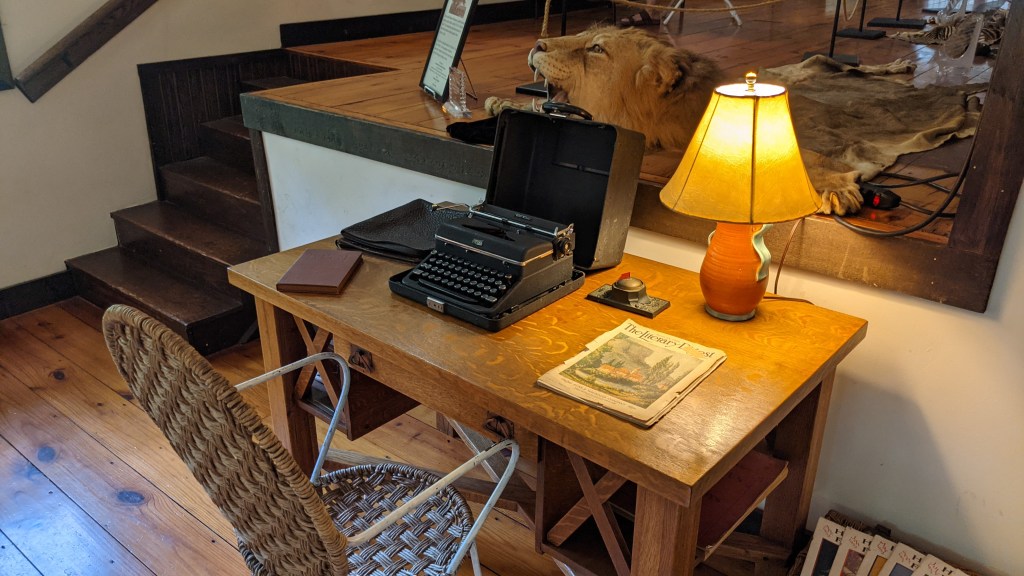
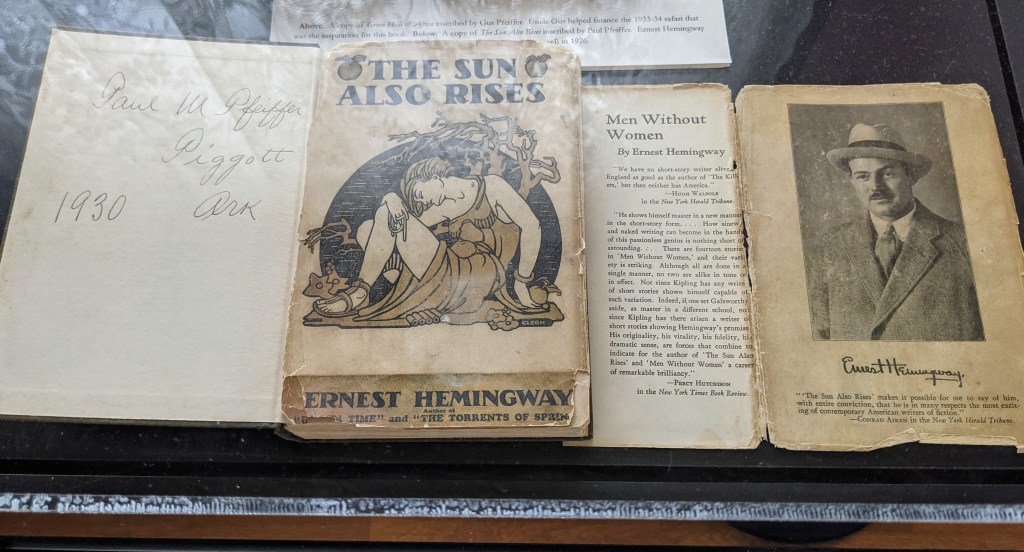
It’s 1:30 p.m. on Monday, July 19, 2021, and I’m hiding in the outdoor restroom of the Hemingway-Pfeiffer Museum and Educational Center in Piggott, Arkansas. It’s the first day of a writing retreat hosted at the center, and I’m supposed to be working on “my art.”
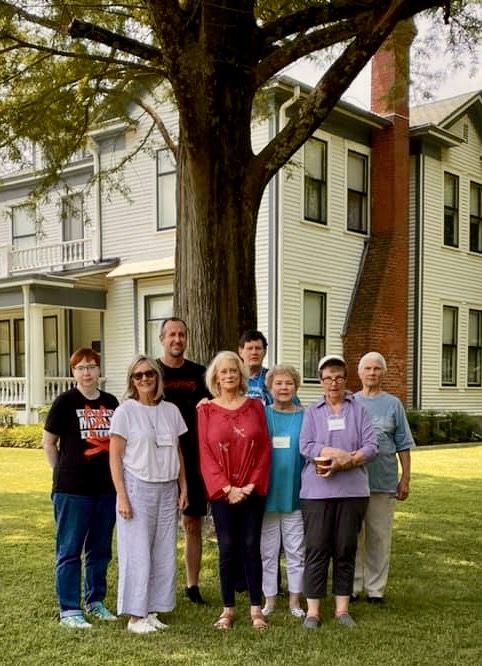
Seven attendees and I started our day with introductions and an overview of the retreat from the instructor and writer-in-residence, Mary Miller. Miller, an approachable storyteller whose prose chronicles the tension and tedium of everyday life, has published two novels and two collections of short stories, along with stories in The Paris Review, the Oxford American, and other well-regarded periodicals. I listened to her latest novel, Biloxi, on my drive south from Minneapolis.
I decided to attend the retreat based my mom’s recommendation, although with some trepidation. My mom is a devoted attendee who thought I would benefit from the collegial atmosphere and discussions about craft. I’ve never attended a writing retreat and didn’t relish the idea of having my writing critiqued by a bunch of geriatric strangers. I’m not even a big Hemingway fan, either. I enjoy his writing but not enough to make the 13-hour drive to visit the place he occasionally visited while writing A Farewell to Arms.
Despite my doubts, it was a good excuse to visit my parents in Jonesboro, a short one-hour drive from the museum, and to try something different after a grueling year of Covid quarantine. That and I was still unemployed after a year and a half of job rejections. Why not use my spare time learning to be a better writer?
Arkansas State University Heritage Sites has been hosting the retreat at the Hemingway-Pfeiffer Museum annually since 2002. Every year, the visiting author signs a quilt square that is framed and placed on a wall in the Educational Center. The earliest square is from July 7, 2002. It’s signed by author Lorian Hemingway, the daughter of Gregory Hemingway, Ernest’s youngest son with Pauline. Both she and her father – who later identified as Gloria and underwent gender reassignment surgery – each have fascinating stories all their own.
Those alluring details can’t stop me from seeking refuge in a restroom, however.
A short while earlier, following an awkward lunch, we are given an hour and a half of independent writing time. The director, Shannon Williams, tells us that we’re free to write wherever we like – here at the Educational Center, in the Pfeiffer house, or at the studio above the barn where Hemingway did his writing. I follow Dr. Adam Long, the executive director of Arkansas State University’s Heritage Sites, and the only other guy in our group, a sixty-something man named Bill from Kentucky.
Adam leads us to the house and gives us a cursory tour of the rooms, pointing out places where we’re welcome to write. I choose an open room on the second floor with conference chairs arranged around the perimeter. Adam tells me they probably won’t have any tours today, but if people do come through, I can just close the door and continue working. That will be interesting, I think, imagining myself springing to my feet and slamming the door on a family who planned months on end to visit this historic home once graced by Hemingway.
Adam adds that he will lock the front door to the house because it tends to blow open. He and Bill head off to see the rest of the house.
I start working on a story about childhood friends, but I’m too unsettled to focus. I had just watched Ken Burns’ PBS documentary on Hemingway before my visit, and now I want to explore the house and see the remnants of the writer’s experience in Arkansas. As I wander room to room looking at the memorabilia, the downstairs door opens and closes, and I hear shuffling and banging. Bill must have returned, and it sounds like he’s burglarizing the place. I want to investigate, but I’m too tired to bother.
Fathers and Sons
My trip to Piggott had taken a surprise turn when my traveling companion – my 11-year-old son, Oliver – and I arrived at the midway point of our drive. I had reserved a teepee on Airbnb for our stop in Kansas City, Hemingway’s old stomping grounds, on the way to my parents’ place in Jonesboro. Oliver was going to hang out with his grandparents and cousins while I attended the retreat.
At the first sight of the teepee, Oliver was thoroughly nonplussed. “Do we have to stay there tonight?” he whined.
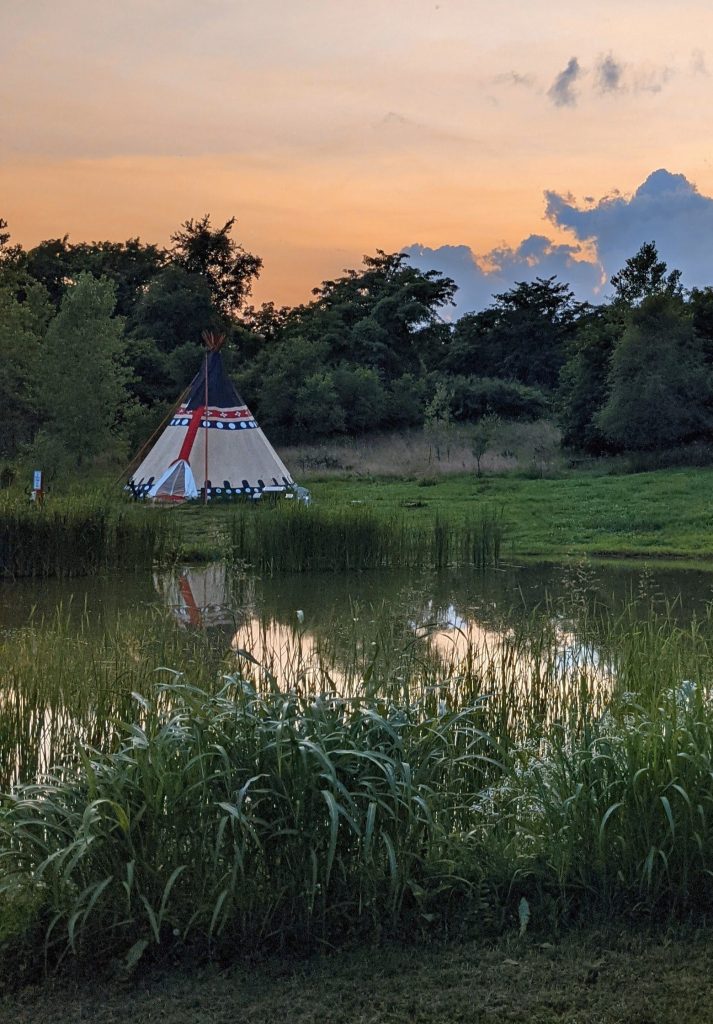
He wanted AC and TV, not BS. He wanted to be back home playing Fortnite or Minecraft on his PC, not hanging out in a teepee with faux-Native American décor listening to his old man snore.
“It’ll be an adventure!” I enthused.
“Yeah, right,” came his inevitable reply.
Situated off a deteriorating highway flanked by abandoned storefronts, our teepee was tucked in the backyard of a modest suburban home and right next to a murky pond that belched with croaking bull frogs. I went to “test” the outhouse and told Oliver we would have the distinct privilege of pooping in a sawdust-filled five-gallon bucket. He dropped his head in defeat and sulked into the teepee.
It was muggy outside, and Oliver complained that he felt sticky and gross, so he stripped off his shirt and settled in to watch YouTube videos on the laptop. That’s when the bull frogs kicked up their croaks a notch and started doing call-and-response with a chorus of crickets.
“How am I supposed to sleep with all this noise?!” Oliver demanded, storming over to a chair and announcing that he would be listening to Yo-Yo Ma until he fell asleep.
“Good call,” I replied, returning to my place in Hemingway’s A Moveable Feast. A short chapter later, I glanced over my shoulder to see Oliver soundly sleeping while the frogs and crickets competed for swamp cred.
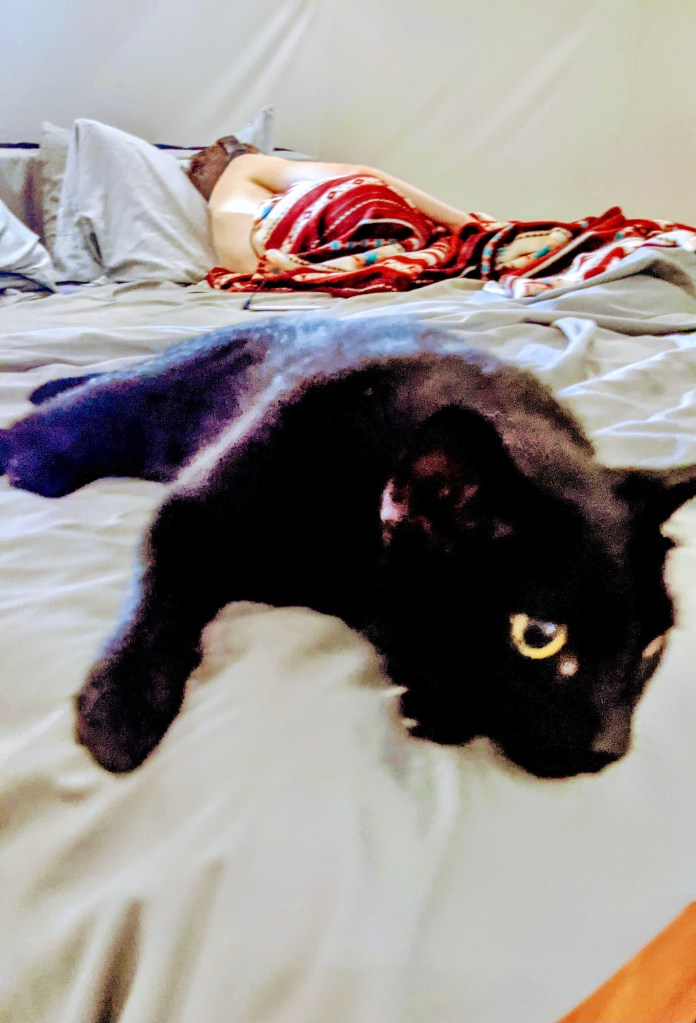
The teepee was illuminated inside by solar-powered patio lights. They were brighter than a single table lamp but dim enough to be ignored by heavy sleepers. Oliver always slept with a table lamp on; I customarily slept in darkness that rivaled black holes. By 2 a.m., Oliver’s phone was long dead, and I was wide awake. Oliver started to toss and turn while I thought through the logistics of Plan B. I would simply book a hotel the next day, and we could spend the afternoon in Kansas City with friends before driving to Jonesboro on Sunday.
Plan B changed to Plan C the moment Oliver woke up.
“I can’t sleep with all this noise!” he whined, springing out of bed and frantically pacing the back and forth in the teepee.
“Do you want to pack up and drive to Jonesboro?” I asked him, hoping he would say no.
“Oh, Dada. I know!” he beamed. “We can get some gum and energy drinks and listen to loud music to stay awake! You can get a coffee and an energy drink, so you’ll have a back-up after you finish the first.”
We were back on the highway in less than 15 minutes. At 2:30 in the morning. By the time we made it to Jonesboro, the car, my son, and I were all cruising on fumes. Oliver slept soundly for hours after our arrival, while I struggled to catch a couple hours of rest.
My eyes finally dimmed as I reread lines from Hemingway’s story, “Fathers and Sons”:
Like all men with a faculty that surpasses human requirements, his father was very nervous. Then, too, he was sentimental, and, like most sentimental people, he was both cruel and abused. Also, he had much bad luck, and it was not all of it his own.
I, too, had been cursed with much bad luck, bad luck that had left me feeling suicidal at times. Fortunately, I had a loving son to accompany me on my journey.
A Clean, Well-Lighted Place
Monday morning rolled around, and I packed the car for the short drive northeast from Jonesboro to Piggott. I’m nearly 50, but my mom nevertheless insisted on loading me up with a pantry’s worth of snacks before taking my picture in front of the car. I felt like an overgrown kid heading to summer camp.
The drive through rural Arkansas, through towns named Marmaduke and Rector, made me lonely – the flat farmland and small, sometimes desolate, towns reminding me of how empty and quiet our country can be beyond the cacophony and occasional chaos of cities like Minneapolis.
When I finally pulled into the drive of the Pfeiffer home, I took a moment to sit in my car and examine the large but plain Victorian facade. It wasn’t as stately as I had anticipated. It didn’t look grandiose enough to house Hemingway’s larger-than-life persona or the fortunes of his in-laws’ pharmaceutical empire. But it definitely dwarfed the ‘70s-style brick rambler that served as the Hemingway-Pfeiffer Educational Center, where our writing classes would be held.

As I entered the center and angled my way toward a seat, an older woman at the conference table blurted out, “I bet I know who you are. You’re Fay’s son.” She introduced herself as Charlotte, a friend of my mom. They had attended several retreats together. Another woman in the room chimed in, “Oh, yeah. Fay with no ‘e.’ She’s a regular.” That was Talya, the only published novelist in the group besides the instructor.
Oh, great, I thought. Every expletive and lurid phrase I read aloud is going to find its way back to my mom. Did I even have anything free of profanity or sexual innuendo, I wondered.
Lucky for me, I wouldn’t be called on to share my work the first day. Instead, we had a great conversation about the humor and wisdom of Anne Lamott’s Bird by Bird, a book all novice writers are encouraged to read at one point or another, and then dove into a reading of Joe Brainard’s I Remember. Miller, reading the crowd, skimmed over Brainard’s more titillating memories about his sexual experiences.
It was after that and lunch that we broke for independent writing time, and I found myself alone in the Pfeiffer house before hiding in the restroom. When I returned to the Educational Center, Karen, an assistant with ASU Heritage Sites, announced to the group in an almost conspiratorial tone that I had selected Max’s room in the house. Max was the Pfeiffer’s fourth child who died from the 1918 flu epidemic at age 11. I had chosen the dead kid’s room, who died from the flu no less! Was that an omen?
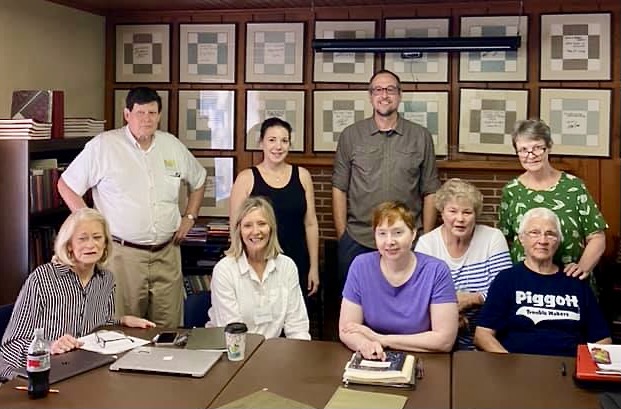
Once the entire group returns to the meeting room, two attendees volunteer to share what they wrote during the break. Tonia, a retired attorney from Little Rock, reads an endearing account detailing her discovery that her maternal grandfather, who adored her and showered her with love and attention, wasn’t her real grandfather. Next up, Bill, whose occupation escaped me, launches into a sprawling, borderline-metaphysical account of his life and the universe. We’re dumbfounded. It’s a prolix soliloquy that sounds like free verse. (The next day, Bill transforms the first chapter of prose into a poem per the group’s recommendation, and we all agree that it’s much better.)
With that, we’re dismissed for the day, and I jump in my car and make a beeline for the Missouri border. Piggott is in a dry county, and I need booze to help me sleep and process my first strange day at the retreat.
Back in my room, I pour myself some scotch, fire up Spotify for background music, and set to work on a story about the competitive nature of two boys, and the envy one has toward the other.
Too distracted to write, I step outside my room to scope out the inn’s lounge and dining room. The door clicks shut, and I immediately realize I’m locked out. Shit! My cell phone is in the room, and there’s no phone in the lobby. I ring the front bell, but no one responds, so I head back to the second floor and nervously knock on the guest’s door across from mine. No answer. I cross the hall and knock on another door.
“Is someone out there?” a woman yells. She peeks through the curtain in the door’s window, and I recognize Charlotte’s face. “Who is that?!”
“It’s Damon, Charlotte. I’m sorry to bother you, but I’ve locked myself out of my room, and I need to call someone to let me in.”
“I’m not dressed, Damon,” she adds before quickly cracking open the door and thrusting her phone at me.
“I’m very sorry. This should only take a minute,” I reassure her.
“It’s okay,” she tells me. “I’m your mother’s friend.”
Sleep comes easier that evening with the help of scotch. Like the old man who stays too late drinking at a café in Hemingway’s story, “A Clean, Well-Lighted Place,” I feel like the loneliest man in the world, the drink in hand my only companion. But I am content. I don’t even mind the rumble of trains outside the inn.
A Way You’ll Never Be
We open the conversation on the second day with a discussion about Jo Ann Beard’s essay “Now,” which I love for the vivid description of Alaska, the author’s channeling of her father’s World War II experience, and references to Neil Young and Denis Johnson. There is dissent over the essay’s value. Some of us like the imagery and the free-form style; others, especially Beth, a writing instructor at the University of Tennessee-Martin, is frustrated by the lack of structure and focus.
We learn that the piece was originally a speech Beard presented and later printed in AGNI magazine. Beth is not cool with this. “Do you think we could get away with something like that?”
Mary clarifies that Beard wrote a celebrated essay for The New Yorker called “The Fourth State of Matter” about a mass shooting at the University of Iowa that won her a loyal audience from that point forward. Mary promises to hunt it down for us.
Next up is Cheever’s story Reunion. This one is about an estranged father and son and a day-drinking excursion. It promptly brings out the psychoanalysts among us. Bill, for the first of what will be many times to follow, opens the Pandora’s Box of his personal life and shares an account of his time in a psychiatric hospital. As he veers farther off topic and into the murkier recesses of his mind, the rest of us, intrigued and unnerved, collectively pull back a little from the table, acknowledging that a boundary has been crossed.
Charlotte, a former school librarian, soon mollifies us with a piece about her childhood in Jonesboro, Arkansas, in the 1950s. Next, Beth shares a story about meeting William Stafford during her stint as a graduate student, reminiscing how she smugly treated the anthologized poet. Her story is full of subtle references to Stafford’s “Traveling Through the Dark.” The references are lost on our group. It’s been more than 20 years since I’ve read the poem, and the others haven’t read it at all. But it’s a clever story, and a beautiful reminder to wake up every morning and get to work on what you love.
That evening after dinner, I grab some scotch, my portable speaker, and a copy of Beard’s “The Fourth State of Matter” and head to the rear deck of the inn to read and scribble some thoughts. The sun is setting in time with Yo-Yo Ma’s cello. The deck shakes as a train blows by in the background. A flock of small birds float by on the breeze, skirting past a waxing gibbous moon that has just begun to peak around the corner of the inn’s roof. A text from my wife says she’ll call soon. The phone remains silent.
I look across the town from the balcony. It must have been a much different place in Hemingway’s day. I gulp down the scotch, savoring the earthy-sweet bloom of heat in my mouth. I know that I will never be the writer I want to be.
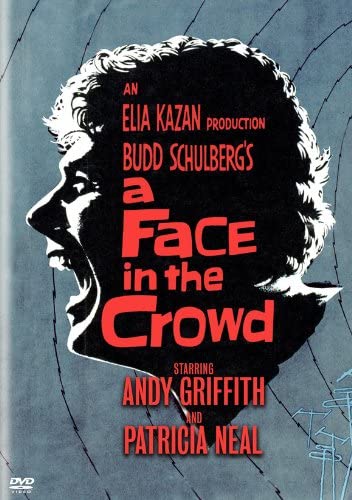
Back in my room, I pull up Elia Kazan’s A Face in the Crowd on my laptop. The movie is Piggott’s other major claim to fame. Part of the film is set in the town.
The movie had a resurgence after the 2016 election. Several political commentators noted the similarities between Donald Trump and the film’s main character, Larry “Lonesome” Rhodes. Lonesome is a drifter who uses his good-ole-boy schtick to rise to celebrity status on TV before wedging his way into politics. He’s even referred to as an “influencer,” just like today’s media-savvy promoters on YouTube, Instagram, and TikTok. And, like Trump, he embellishes a populist persona to pitch false claims to “real Americans” over the airwaves.
Piggott is smack dab in Trump country. I could step outside the inn and count no less than five or six Trump bumper stickers. I could walk a few blocks from the main square and spot at least two or three “Trump 2020” banners and even a crudely written “Stop the Steal” yard sign.
The irony isn’t lost on me, but, judging by the political placards lingering long past the election, the locals didn’t get the memo.
A Day’s Wait
On Wednesday morning, Mary is excited to ask us about Beard’s essay, “The Fourth State of Matter.” We dig into Beard’s description of the degeneration of her dog, her husband’s abandonment of their marriage, and the mass shooting that kills her colleagues in the Department of Physics and Astronomy at the University of Iowa.
It’s a riveting essay with an eloquence that forces us to question our value and abilities as writers. If it takes a topic as horrific as mass murder to be a noteworthy writer, what hope do we have? How do you compete with that in a world full of limited attention spans?
“I guess I can’t be a writer, then,” Charlotte says. “Nothing that interesting happens to me. My life is too normal.”
We take turns offering her hollow words of encouragement, but each of us seems to realize the reality of the situation. A devastatingly sad essay has left us sadder still.
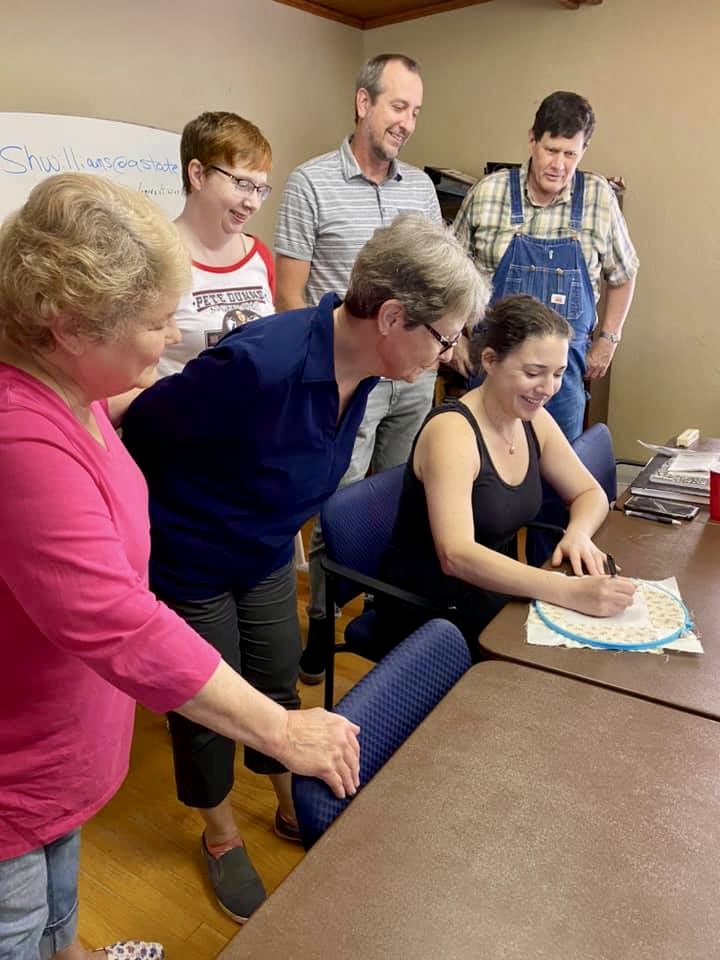
Fortunately, Karen turns our thoughts and stomachs away from despair. A veteran violist with the Memphis Symphony Orchestra, Karen shares a short piece about a subject that is near and dear to our hearts: pork. She strings together a comparative history of pork dishes in the Mid-South with their native dishes in Austria, Germany, and France, singing its praises with allusions to great composers. It’s the perfect transition to lunch.
At break, I head back to the inn to prep for a phone interview for a job in Minneapolis. Rejection fresh on my mind, I take a hard pass on my independent writing time and stretch out on the bed. It’s my turn to read my work when the cohort regroups this afternoon, and I’m not relishing the forthcoming criticism.
Back in the classroom, I read the first part of my story, broadcasting the right tone for the story’s insecure adolescent narrator. Even though I emphasize words like “piss” and “dick,” the overall response is positive. A couple of the attendees say they can relate to the narrator’s plight. Some want to know what happens in the second part, since I accidentally included a page and a half of it. I want to rework the second part, I explain, describing some of the potential plot scenarios I’m considering. The group is encouraging, and I spend the rest of the afternoon session playing through various outcomes in my head.
Talya reads a flash fiction story next. It’s about an aging woman inspecting her garden in the morning. I can easily imagine the piece in the front half of Harper’s magazine.
Before we break for the day, I invite the group to join me for dinner at the pizza place on the square and note that the deck behind the inn has a great view of the sunset. I could use some company. Tonia and Talya are the only takers.
At the pizza place, we ask the teenage waitress holding down the fort if it’s okay to bring our own wine into the restaurant.
“I don’t know, but I doubt anyone will be here tonight, so I really don’t care,” she replies.
Without missing a beat, Tonia hands me the key to her room and gives me instructions on where to find her box of Franzia. I smuggle my bottle of red and Tonia’s box of white back to the pizza joint in my book bag, and we wash down our pizza with glassfuls of contraband.
One Reader Writes
We dive into some flash fiction samples on Thursday, starting with George Saunders’ story “Sticks.” One of my favorite living writers, Saunders captures my attention by creating absurd and surrealistic settings that are navigated by characters struggling with their humanity. “Sticks” is about Saunders’ father’s tradition of decorating a pole for the holidays.
The story inspires me to search for quotes from Saunders while the group reviews our other samples for the day. Saunders has a reputation for producing quotes like this: “What I regret most in my life are failures of kindness. Those moments when another human being was there, in front of me, suffering and I responded … sensibly. Reservedly. Mildly.”
I will discover that this is the universe, via Saunders, preparing me for the afternoon session.
One o’clock rolls around, and I meet with Mary for my one-on-one review session. I had decided to share the first 10 pages of a memoir I began writing during the pandemic because it felt like the most earnest writing I’ve done to date. The book opens with a recollection of a night in December 2020 when I contemplated hanging myself from a tree in the backyard of my rental house in south Minneapolis. My wife and kids were inside decorating the Christmas tree and listening to holiday music while I sat outside by a fire and methodically attached thick zip ties around my neck.
As the book progresses, I shift settings to a visit with an old college friend that prompts flashbacks to the the year I spent in Bulgaria after graduation. Mary points out that the sections about Bulgaria come across more naturally than the rest. She encourages me to keep working on the material and share the draft with her once I have 200 pages.
I leave the review session feeling optimistic about my writing for the first time in as long as I can remember. I’ve always considered myself more of a reader than a writer, so the validation gives me a boost.
The confidence doesn’t last long. Back in the class, I read a couple of my poems, foolishly following Beth, the real poet in the room. I first read a poem called “Old Man Winter.” At the end of the first page, I freeze. I haven’t printed the second page. The room is silent. Embarrassed, I quickly print copies of the second page, pass them around the table, and resume my reading. When I finish, I get an obligatory “That’s nice” from someone before the others start lobbing questions and comments my way.
“What do you mean by ‘latent snow’?” one woman asks.
“Maybe you should change this to a flash fiction piece,” another recommends.
“Do you really need the adjective ‘dusty’ to describe the smell of radiator heat or ‘musty’ for the warmth of an afghan?” the instructor critiques.
I can only manage a meek defense.
The next poem I read is about my daughter – her search for knowledge and answers and my fear of losing her too soon to a cruel world that doesn’t love her. I choke up as I read the lines: “I want to wrap my arms around you,/ Shield you from your pain/ And keep you close to my heart./ But you’re leaving me at 13,/ Too soon, it seems,/ To fully protect you or to fully grieve.”
The tears are unstoppable. My strained relationship with my daughter has been lingering in the back of my mind for months now, and I’m finally processing it. I apologize and explain it’s the first time I’ve read the poem aloud. The others smile as I finish the piece. My pathetic display is met with positive reception, and for the first time all week, I’m actually glad to be here.
That evening, after a catfish dinner with the group at a local restaurant, I let myself decompress. In a sense, I’ve accomplished something I wasn’t expecting – I’ve held out my writing as a mirror, reflecting deeply seated thoughts and beliefs for others to see, while discovering another vision of who I’ve become and who I want to be.
The End of Something
Boobs. That’s the topic that provides some much-needed levity during Friday’s discussion. It’s inspired by the reading of Lucille Clifton’s poem, “homage to my hips.” The attendees wonder if any poets have written about boobs in the same way, prompting Charlotte to search the web for poems about breasts. She comes across a book about Asian breasts. I tell her to proceed with caution. Scrolling down a webpage, she gasps, “Oh, my!” and we all start laughing.
The conversation takes a more serious tone when we discuss the story “Envy” by Kathryn Chetkovich. It’s about her relationship with Jonathan Franzen, and her jealousy over his success. She doesn’t mention him by name in the story, but everyone looks it up.
It’s an appropriate, maybe coincidental, choice for one of our final readings during the retreat. Envy could be considered a central theme of Hemingway’s work. His characters envy bullfighters, wild game hunters, other men’s women. To an extent, Hemingway envied the writers in Paris who helped him get his start in fiction: Sherwood Anderson, Gertrude Stein, Ezra Pound, and F. Scott Fitzgerald. Some of those writers ultimately envied him in return – or, at least, Fitzgerald did if Hemingway’s own egotistical account in A Movable Feast is any indication.
I’m certainly envious of the other writers in the group who appear confident and at ease with their writing, something I had hoped to achieve by attending the retreat.
As the final day progresses, Talya shares a story about the deterioration of her long-vacant high school and the disappearance of time. We take turns sharing memories of our old schools, enchanted by nostalgia.
Karen captures our attention with a travelogue about visiting Key West during the Cuban Missile Crisis in 1962. We all want to hear more about the mermaids of Weeki Wachee and Karen’s mother’s nucleomituphobia (a term that’s new to all of us). I don’t think to ask Karen if she knew who Hemingway was when she was a little girl traveling through his former hometown a year and a half after he blew his brains out in Idaho. And what would the author have made of the Bay of Pigs and the missile crisis, I wonder. Hemingway didn’t have much interest in Castro and Guevara or their fight against Batista. He just wanted to fish and drink and salvage his reputation as a writer with The Old Man and the Sea.
The reading that most intrigues me is a final poem from Beth called Trail. She asks us to consider two possible endings. I opt for version one but think she should stop short with the lines: “Listen to the bell ring./ It does not have to be/ the devil declaring/ he’s come to call again.”
I recognize it as a nod to Hawthorne’s “Young Goodman Brown,” but I don’t probe Beth about the allusion, and I gloss over the possible connection to For Whom the Bells Tolls. It’s only after the retreat that I review the ending of Hemingway’s highly regarded novel. The book ends with the main character, Robert Jordan, lying in a forest with a broken leg as he prepares to blow up a bridge to thwart the enemy’s advance. Jordan faces a dilemma: He can carry out the mission and wait for the enemy to find him and kill him while his fellow soldiers escape, or he can try to flee with his comrades and possibly live out his days with his lover, Maria. He chooses to stay, the smell of the pine needles on the forest floor filling him with nostalgia.
The novel reminds us of nature’s maxim – all things must come to an end; we are simply part of the cycle. Life can seem futile, but does it remain so if we get to choose how to live it?
I came to the retreat with a sense of dread. I would be bored. I wouldn’t have anything in common with the attendees. I would realize my efforts to write were hopeless. It would drive me deeper into the depression and futility that have haunted me for years.
Instead, I leave the retreat with a sense of purpose. Impressed with the insight of my fellow writers and the confidence they have to examine memories both beautiful and hideous. I want that. I don’t want to succumb to despair and cut my life short like Hemingway.
The devil might very well come calling again, but hopefully I’ll be too busy writing to pay him any attention.

 damonguinn.com