Featured

Crowbarred

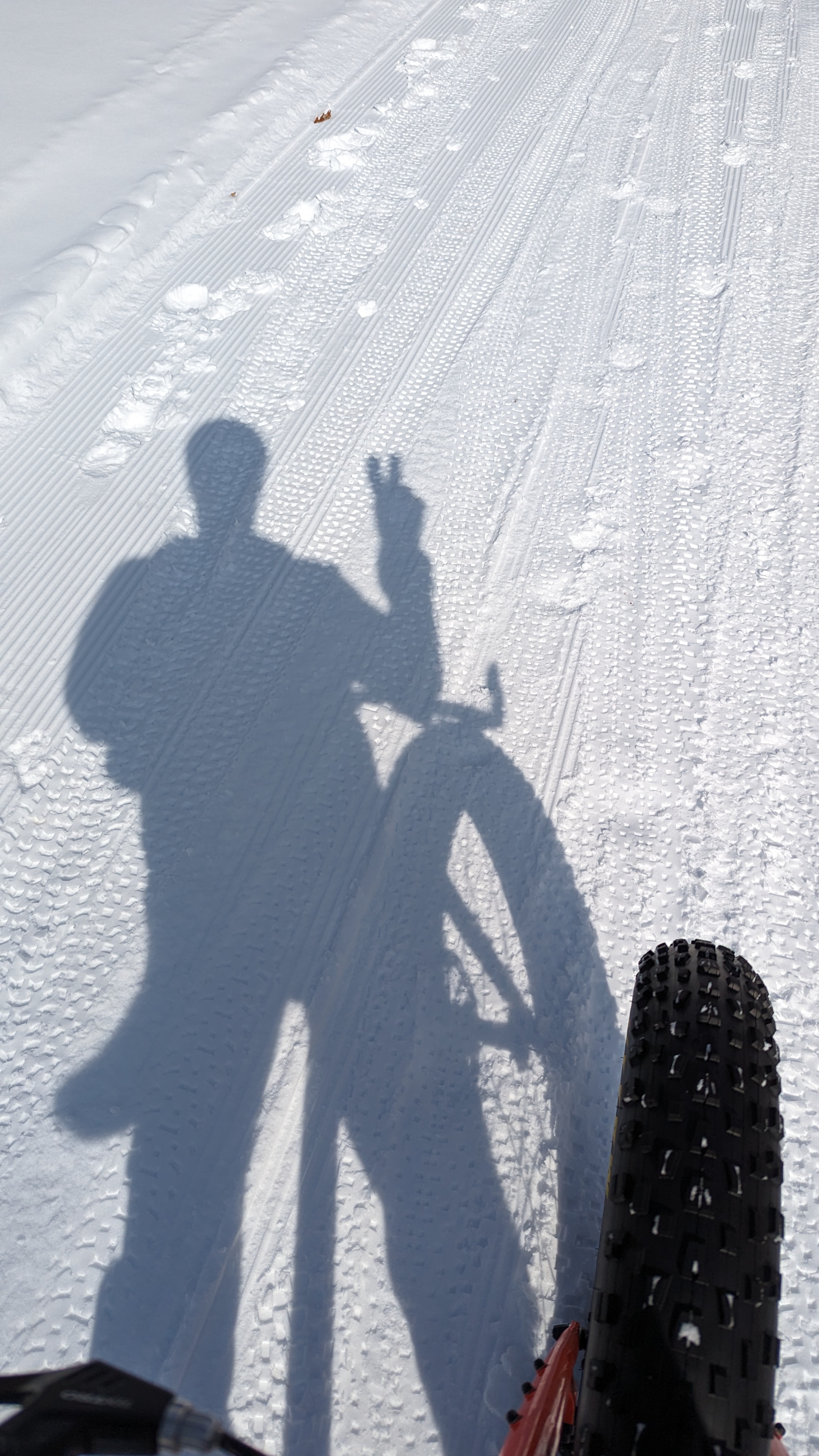
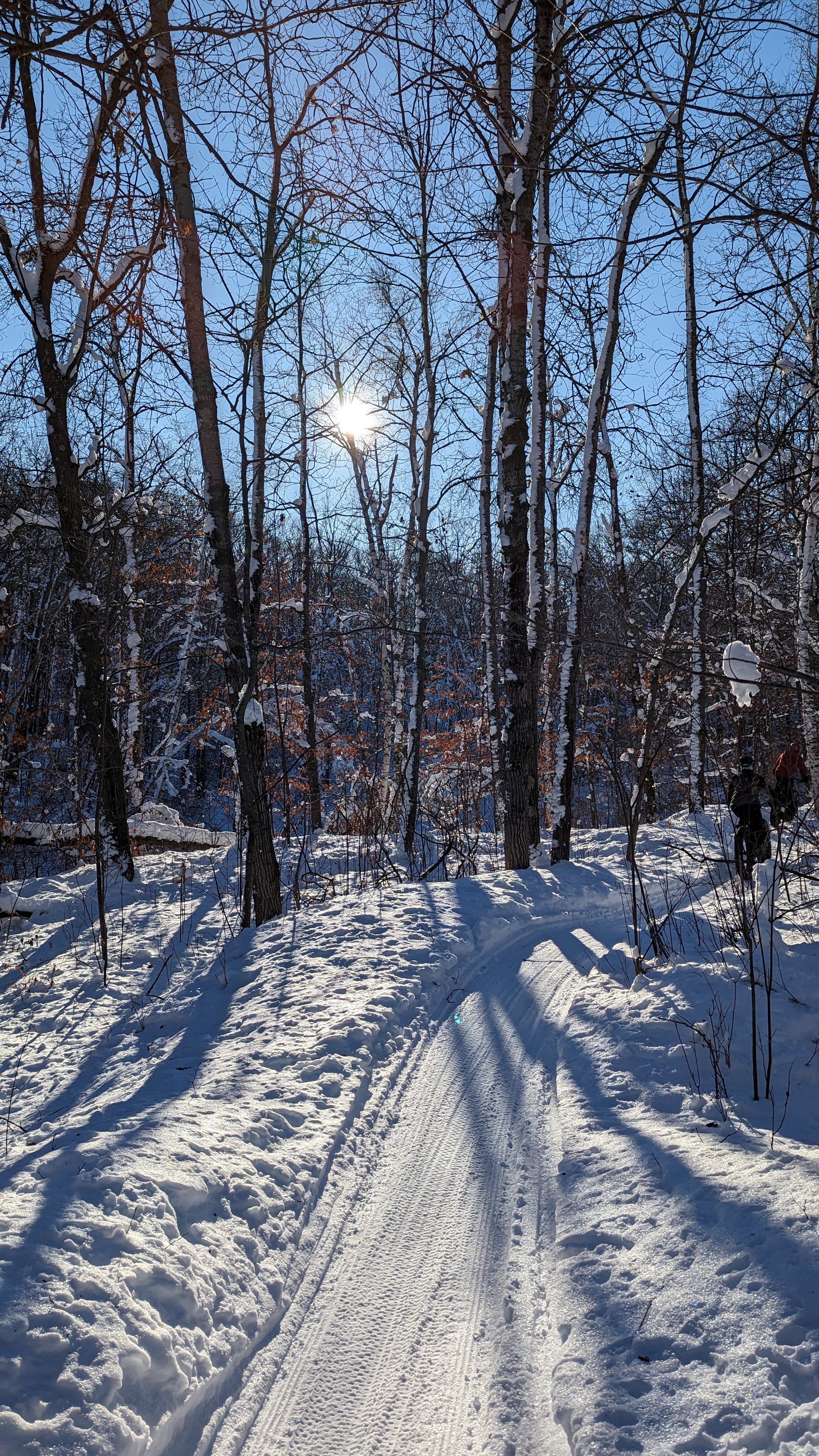
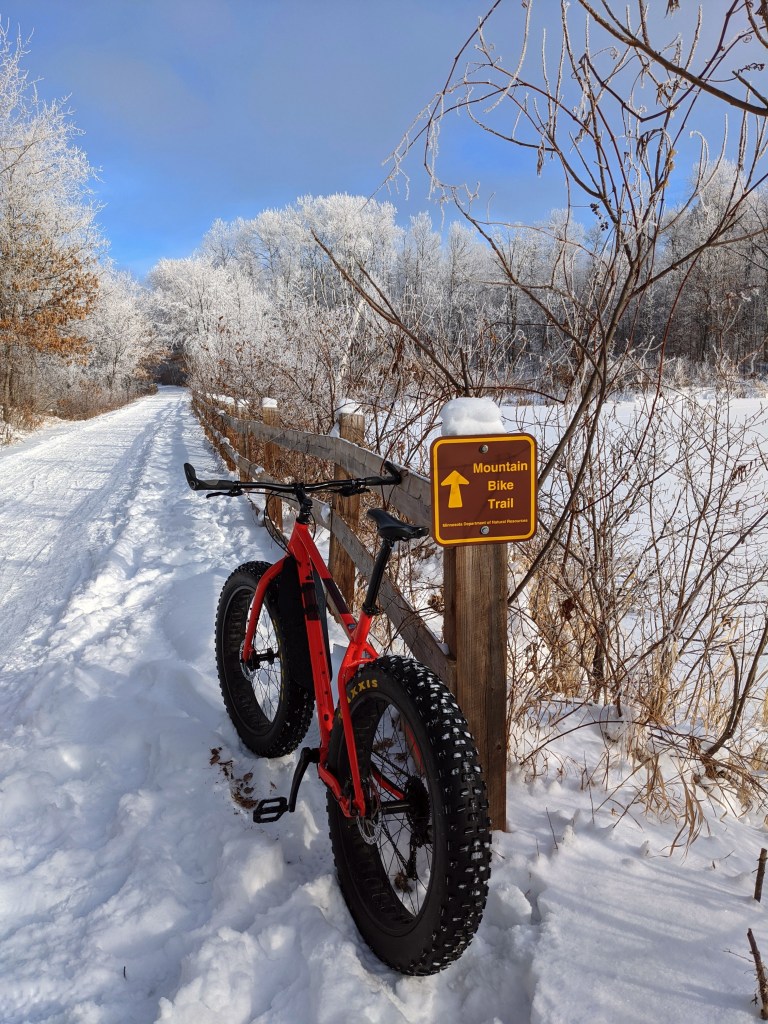
My story begins in the land of the Ojibwe and Aandeg the Crow, in a state of absolute serenity . . . a quick weekend trip to the middle of Minnesota, where miles of mountain bike trails freshly blanketed in snow unfurled before me. My face, the only part exposed to the cold air, stung slightly in the breeze as I pedaled the groomed, cloud-like path on my blaze-orange fat bike. Four pounds of air in each tire flattened against the soft-packed snow. The air was perfectly quiet and still.

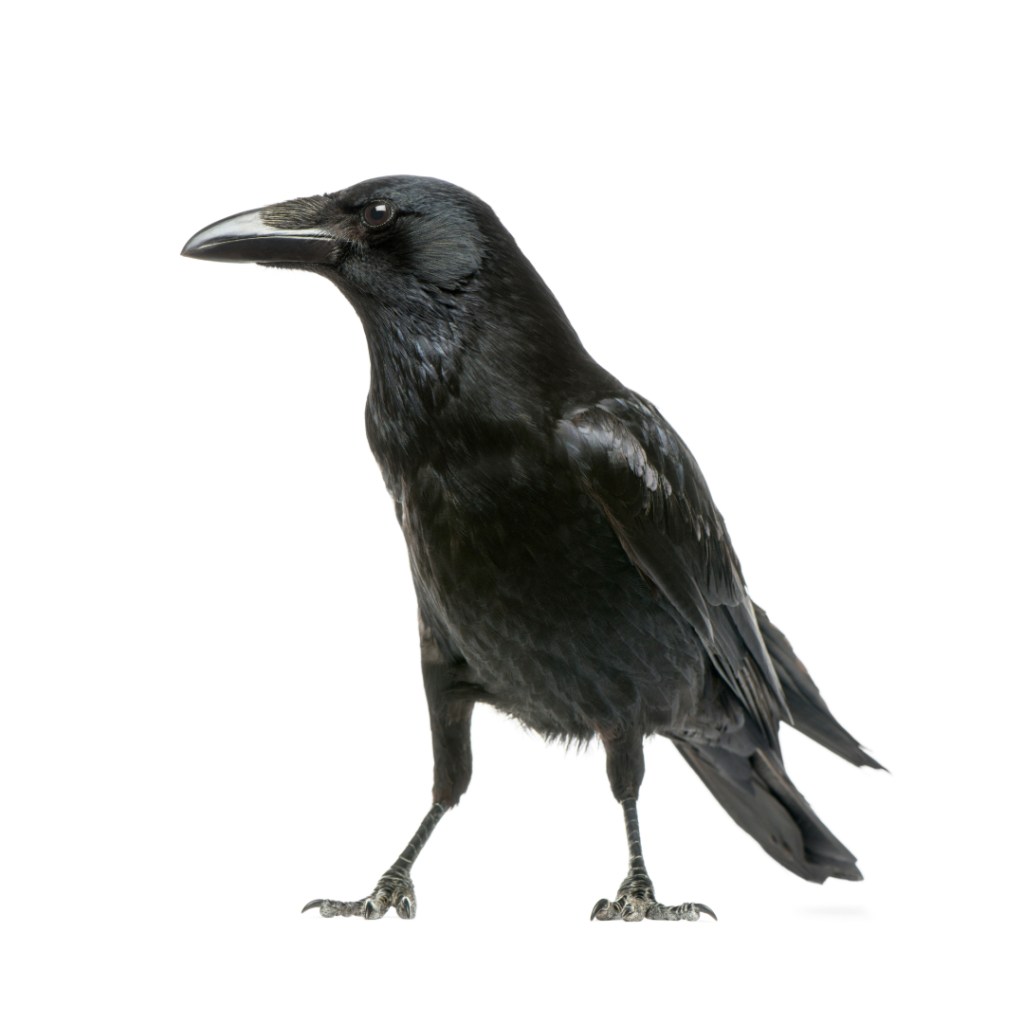
Cruising along the snowy singletrack, my mind drifted to the story of Aandeg. According to legend, Aandeg the Crow was without purpose. During the creation of all the “flyers,” the Great Spirit gave a unique purpose to the eagle, the hawk, and the loon but not the crow. So, Aandeg flew around searching for his purpose, seeking out other animals for guidance, but he found no purpose from what they taught him. Continuing his search, Aandeg responded to the cries of other animals in distress, first a squirrel feeling “sad and drained of life,” and then a rabbit who wanted to die it was so tired of being chased by the fox. Aandeg used the knowledge he had gleaned from others to advise the squirrel and the rabbit and restore hope in both. The legend soon spread that Aandeg found his purpose in helping others find or renew their purpose. “Aandeg is our traveling companion always reminding us that . . . [w]e cannot find our purpose if we sit on the path,” the story goes on an Ojibwe language and culture website. “Crow teaches that you must meet life head-on and create good connections with those around you and work with spirit of friendship.”
That was my state of mind as I drifted blissfully along the trails, silently questioning my own purpose and whether I was on the right path. For years I had been visiting the Cuyuna Country State Recreation Area, a remediated mining region, to ride my bike and unwind at the Red Rider Resort in Crosby. Only a two-hour drive from Minneapolis, the area has become a popular mountain-bike destination for cyclists in the Twin Cities and beyond. More than 50 miles of easily accessible trails invite riders of all abilities to flow smoothly along their compacted iron-oxide soil—a red ochre so vigorous that the proprietors of the resort placed laminated cards on the plastic mattress covers demanding that guests bring their own fitted sheet to avoid staining the beds and being charged a steep fee for the damage.

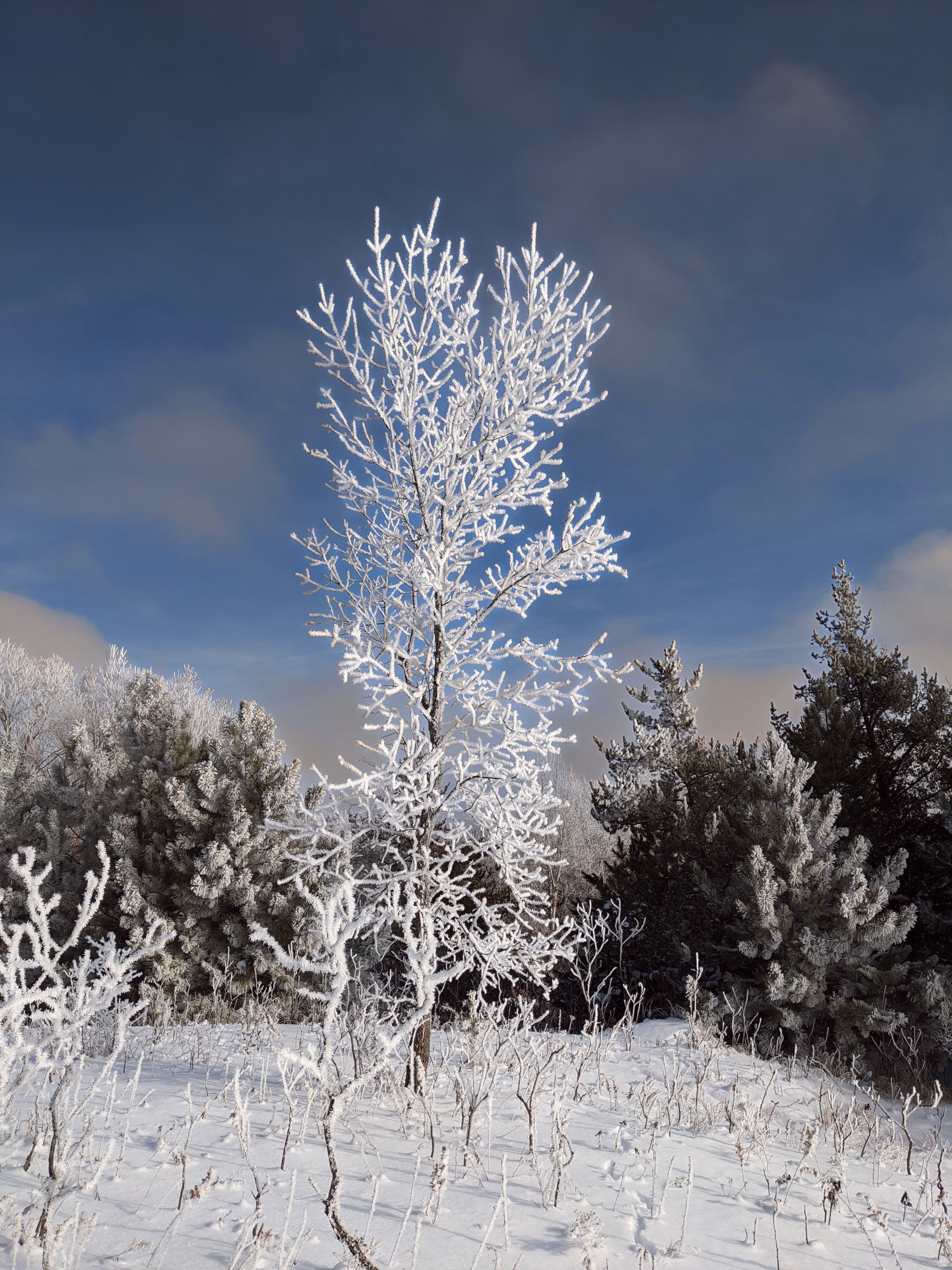
Rolling along trails under towering evergreens and past deep, emerald lakes is a restorative experience, a chance to be rehabilitated by nature as fully as the landscape was rehabilitated after the mining industry moved out. In winter, the place is a sanctuary where hoar frost shimmers like shivering angels in the atmosphere and ruby-red cardinals sing hymns to the solstice.
The land was once home to the Mille Lacs Band of the Ojibwe, now relegated almost entirely to Mille Lacs County, a unique and sovereign, federally recognized tribal government territory. The native inhabitants described their home as the place “where the food floats on water” in recognition of the region’s ample wild rice beds.

My original plan was to visit Cuyuna the first week of February, to make the most of the seasonal snowfall, but the day before I was set to leave, my car was stolen from my driveway. The car was a Kia, and those were being swiped daily by roving bands of teens calling themselves the “Kia Boyz.” The novice car thieves stole cars with the simple insertion of a USB cord behind the ignition. They would film their grand theft auto and joyrides with their smartphones then post them to TikTok. Their following grew by the thousands. When my car was recovered on a nearby side street a day later—the inside trashed with crowbars, bags of new cotton warm-ups, copper wiring, and, strangest of all, a battery-powered vacuum cleaner—I knew it had been swiped by a pro and not a bunch of wannabe gangsters. The ignition was bored out with a drill, and the sockets, wrenches, and assorted tools left behind suggested the thief knew what they were doing. Insurance would cover the damages, but it did little to assuage my discomfort at having my main mode of transportation so easily swiped and my plans for a therapeutic fat-bike getaway thwarted.

Already prone to a serious case of weltschmerz, I often reacted to life’s injustices fatalistically, waiting for one random mishap to knock down the next existential domino. I had experienced a series of misfortunes in the five years since my family and I sold our house in Kansas City and moved to Minneapolis. My wife lost her job less than a year after we relocated . . . that job being one of the main reasons we uprooted our lives. Then, like a fool, I quit my job two months before the COVID-19 pandemic hit because my boss decided to pursue an ill-conceived plan to restructure departments. Little did I know that it would take me nearly two years to find another gig, despite 20 years of experience and sending out more than 150 resumes. The constant rejections and consequential instability left me simmering with anger and hostility and consuming ridiculous amounts of whiskey and beer, all of which threatened my struggling marriage. When George Floyd was horrifically murdered by Derek Chauvin in May 2020 and the city went up in flames, the weight of the world seemed to grow infinitely heavier. The temperature of my anger rose from a simmer to a boil at the system of oppression that so flagrantly murdered Black citizens with alarming regularity and disregarded the basic human rights of its citizens. So, nearly three years after Floyd’s murder, when my as-yet-unpaid-off car was stolen from the alley driveway just four blocks from George Floyd Square, I was primed and ready for a fight . . . with criminals or cops, it didn’t matter which.

Searching for a New Perspective

The air in the woods that day was invigorating, the snow perfectly groomed, and my spirits at an all-time high. It was early on a Friday, and I was the only person on the trails. All was right with the world. In my reverie, time slipped away, and I cruised 10 miles before hunger had a chance to catch up with me. I was feasting on endorphins and completely forgot that I started my ride on an empty stomach. Succumbing to intensifying hunger pangs, I cruised back to the cabin, changed into street clothes, and drove into town.
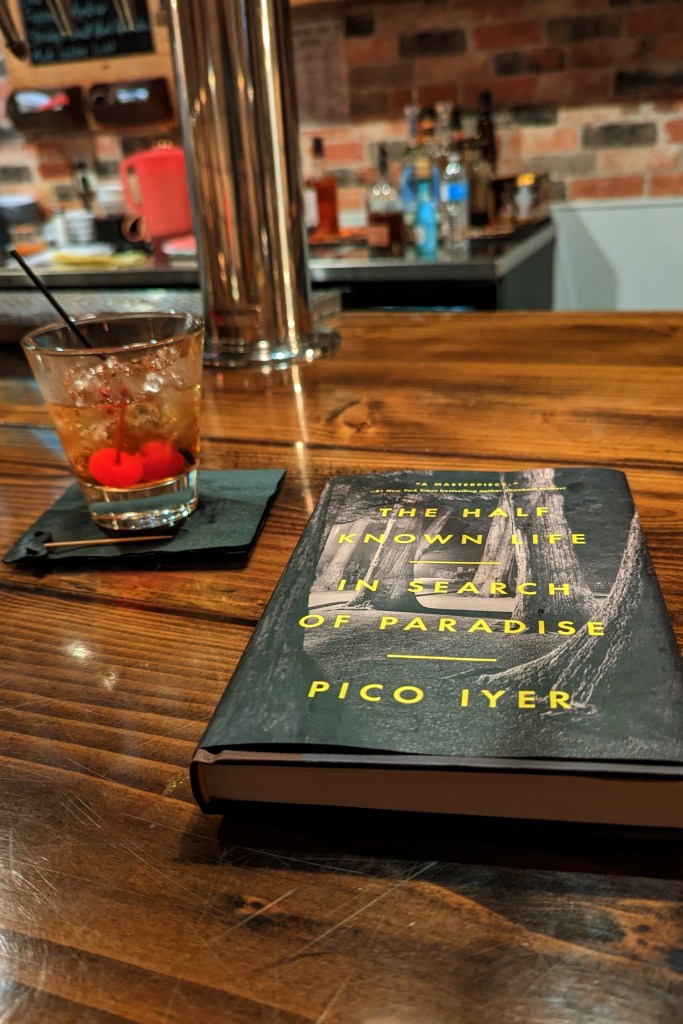
A Half-Known Life: In Search of Paradise

Washing down carne asada with a sticky-sweet IPA at the local brewery warmed me to the bones and replenished the energy I greedily consumed in the woods. Blissed out, I hunkered down with another beer and Pico Iyer’s latest book, The Half Known Life: In Search of Paradise. The premise of the book is that so many of the places considered paradise on earth are also now plagued with conflict. “[A]fter years of travel,” the author reflected, “I’d begun to wonder what kind of paradise can ever be found in a world of unceasing conflict . . ..” Moving from one self-proclaimed paradise to the next—Iran, Kashmir, Jerusalem, India, Japan—Iyer questions why the holiest, most cherished sites are marked by barricades and men with guns. How can he be that surprised, I thought to myself, considering his genealogy and the breadth of his travels? Born in the U.K. to Indian parents, Iyer knows the devastating impact of colonialism all too well. He should be full of the emotion his family name summons to mind: ire. Yet, I easily identified with him every time I read his books. Like me, he has a relentless desire to explore new places and discover unexpected moments with strangers and new situations. Despite that ever-present wanderlust, Iyer admits he himself still feels like a stranger in the world.

Sitting in the brewery in that small Minnesotan town, I was happy. But I couldn’t have been more lost either. I was doing what I loved. I was where I wanted to be. In fact, at that moment, I would not have preferred to be at any of the iconic destinations Iyer visits in his book—not drifting serenely in the houseboats of Dal Lake in Kashmir, not basking under the massive stone buddhas of Sri Lanka, or even experiencing nirvana in the Japanese monastery of Koyasan.

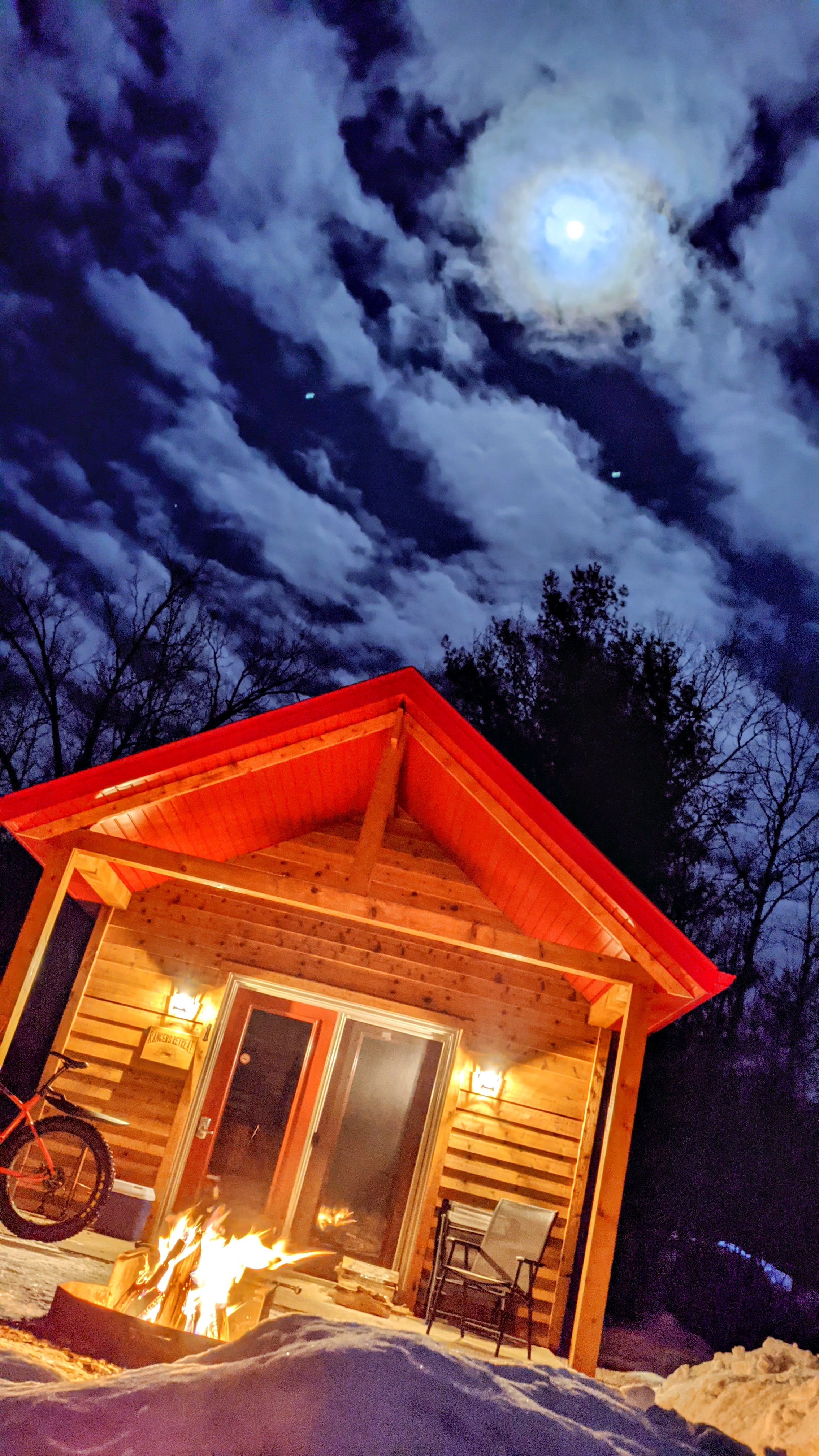
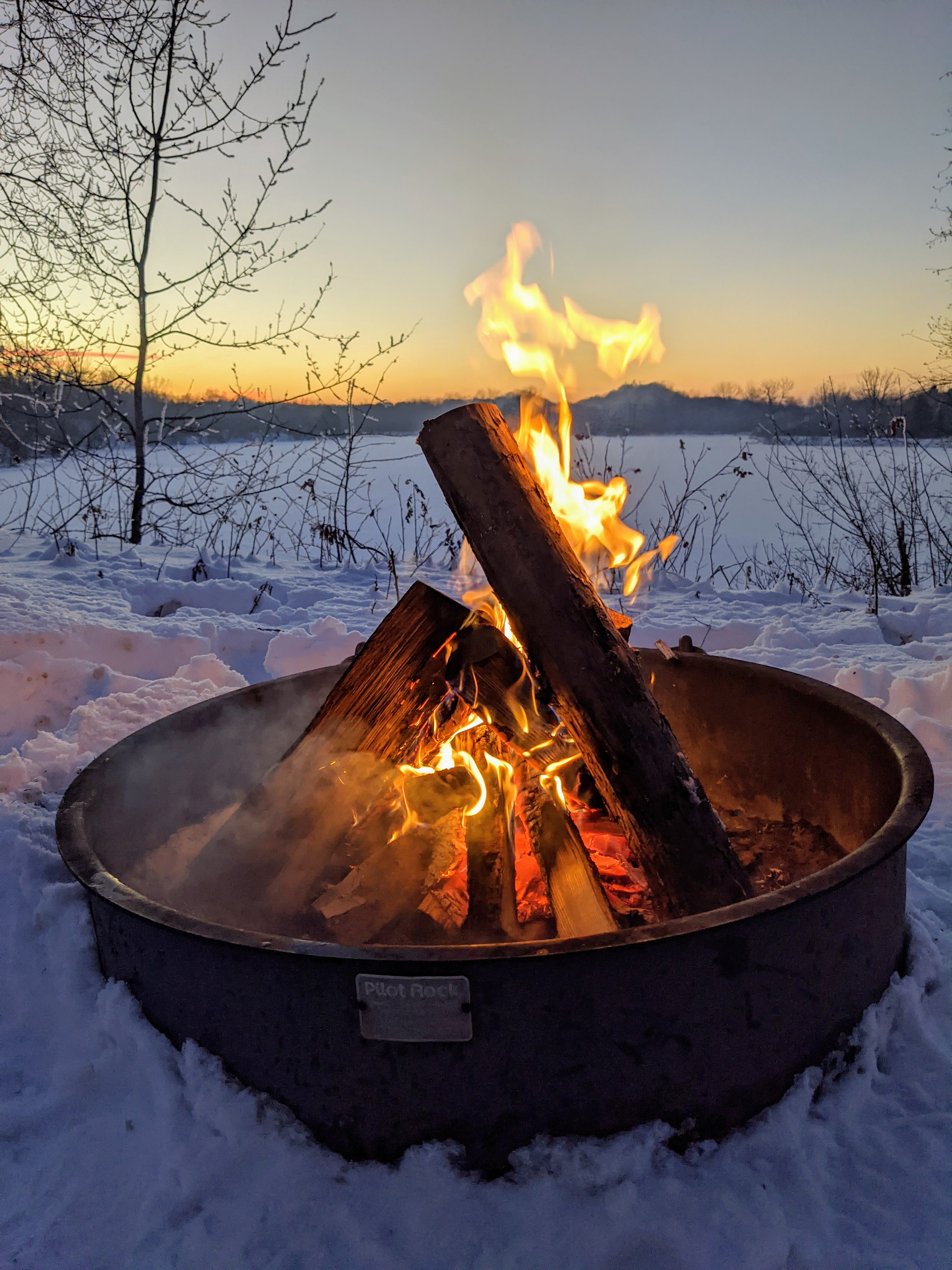
The thought of exotic locales sent me packing to watch the sun set over the downy-white surface of Huntington Lake. In the distance, light blue faded to a dull yellow before erupting into a fiery orange, the snow covering the lake settled into a glacial blue. By the time I got back to the cabin, it was a brilliant, ice-cold evening with Jupiter and Venus stacked together in the inky sky. I quickly lit a fire to bask in the celestial event.

Huntington Lake
Sunset in early March over Huntington Lake in Cuyuna Country Recreation Area.

Some scholars claim that the conjunction of the two planets would have appeared to have merged on the evening of June 17, 2 BCE, forming what the Wise Men in the Bible believed to be the Star of Bethlehem, two years after what is recognized as the birth of Christ and the line of demarcation for the Common Era. I rang up my brother in Portland to describe the brilliance of the duo, perhaps subconsciously sensing the religious import of the moment and wanting to commiserate with my brother about our lost faith. Venus, after all, was once called Lucifer by the Romans, the name meaning “light bringer” in classical Latin, and I identified more with the reference to a fallen angel than a guiding light.
I poured myself a hefty tumbler of scotch in the cabin and returned to the fire to regale my brother with a recap of the ride earlier that day. The scotch warmed and loosened my tongue, and I filled the phone with a rambling sermon in praise of my surroundings, while my brother, taciturn as ever, listened silently. My gab eventually gave way to hunger, and I ended the call to go grab a burger at one of the taverns in town.

After a short one-mile drive to the tavern, I parked in front and found my way to a hightop. It was close to 10, and the place was packed with locals. The place had a welcoming atmosphere, and I felt completely relaxed, so comfortable in fact that I thought nothing of ordering a scotch and a stout despite my copious consumption earlier that evening. Another scotch and stout later, and I was eavesdropping on the next table as a woman about my age told hilarious stories about serving in Kuwait. Everyone at her table was doubled over with laughter. I complimented her and asked if I could sit in on the next story. The group welcomed me to pull up a stool, and I ordered a round for the table. The storyteller, a nurse at the regional hospital, politely declined, bowing out after a long shift and leaving the table in a conversational lurch. As if on cue, a man a few years older than me, stepped in to fill the void, asking the usual questions . . . “Why was I in town?” “Do I visit Crosby often to ride bikes?” “What did I do back home?” With a pause and my slurred “What about you?” he responded that he worked with kids and adults with behavioral and developmental disorders. I told him about my time working at a children’s psychiatric facility in Kansas, and he relayed stories about his patients’ challenges.

The conversation soon dried up, but I hadn’t. Stumbling out of the bar and onto the sidewalk, I zigzagged my way to my lime green Subaru and slumped into the driver’s seat. I punched the ignition and the power button on the radio, threw the gear into drive, and roller-coaster-jerked my way into the lane, blasting classical music while swerving to the arpeggios. The lights of the patrol car behind me shattered my reverie. I panicked and hit the accelerator with a burst of adrenaline. The split-second outburst collapsed into quick capitulation, and I pulled over to the side of the road to accept my fate.

“Have you been drinking?” came the inevitable question.

“Yep,” I replied.

“How much?” the retort.

“A lot,” I admitted, dropping my head in shame.

“Step out of the car, please.”

Here we go! I thought to myself as I pulled my tall, lanky frame out of the car. The next thing I knew, the officer was shining a Maglite inches from my eyes and asking if I wore contacts.

“Fuck yes, I wear contacts!” I blindly bellowed. The blatant act of shining the flashlight so close to my face shocked and dazed me, which was most likely the officer’s intent. Instantly hostile, I could feel belligerence blossoming inside me. When the officer asked if I was willing to perform a few field sobriety tests, I challenged him.

“Like what?” I demanded.

“Just standard field sobriety tests,” he replied, adding to the uncertainty and confusion of the moment. Another officer suddenly appeared with his own Maglite held high, catching me in a crepuscular crossbeam. I slipped my hands into my jean pockets and was promptly ordered to remove them. I jerked them out and threw them up into the air.

“He’s asking you if you’re willing to do field sobriety tests to see if you’re intoxicated,” the second officer stated nonchalantly. “Are you going to comply?”

“Or what?” I heard myself saying.

“Or we take you to the hospital and perform a blood test there.”

“I don’t want to do that either,” I fired back.

“Well then, we’ll have to take you in.”

“Are we really going to do this?” I asked incredulously, baffled not only by what was happening but also at my cliched response.

“We’re really going to do this,” the officer replied before proceeding to frisk me and read me my rights.

Pushing my head down as he angled me into the back of the patrol car, I slumped into the seat and landed shoulder-first into a cage wall separating the back, unable to pull my legs completely into the cruiser due to the tight fit. I shifted as the officer closed the door causing it to bounce off my legs. He yelled at me not to push back, and I argued that the space was too tight.

“I’ve had bigger guys than you back there,” he chided, firmly shutting the door.

I sat in silence, trying to regain my composure before asking, “Where are we going?”

“Brainerd,” replied the officer. “Crow Wing County Jail.”

“I’ve never been to Brainerd,” I muttered. “Cool.”

He started recapping how reckless I was driving along the empty main street, and the only thing I could come up with was, “There was nobody out . . . the place was dead,” knowing it didn’t matter. So, I followed with, “Are you going to tell me you’ve never done anything like this before?”

“Drive drunk? No. My grandfather was killed by a drunk driver,” came the rebuke.

I sat in silence, stupefied. Eventually, I managed a feeble “I’m sorry.”

“About what?” came his reply.

“Your grandfather,” I responded guiltily. “Grandparents are bad motherfuckers,” I slurred, segueing into barely coherent stories about my grandfather serving in the Pacific Theater . . . meeting natives in Papua New Guinea that walked out of the jungle with massive machetes and missing limbs, of a family in the Philippines who welcomed him into their home. The memory of my grandfather telling me the stories when I was a young boy made me wistful and taciturn, and I sat in the squad car quietly ruminating.

The officer broke the silence by asking what I was doing in Crosby. I blathered on about it being one of my favorite places to ride and being sad that I probably wouldn’t return. When he asked why, all I could do was laugh.

We pulled up to the jail, and I was escorted to a desk where I was asked a series of questions about whether I consented to taking a blood test at the hospital and if I understood the consequences of refusing. I didn’t consent, and I didn’t understand. I was drunk, confused, and tired. Nothing made sense. And, yet, surprisingly, the woman asking the questions seemed baffled that I couldn’t cogently respond. Surely, they encountered this all the time. Seconds later another officer guided me into a room and told me to strip.

“Everything?” I asked, astonished.

“Yes,” he said, staring blankly back at me.

The gravity of the situation struck me the hardest when I felt the officer’s cold nitrile gloves clinically inspect my perineum and then hold my ass cheeks apart before handing me the requisite orange prison scrubs and a pair of cheap, knock-off Crocs.

“Would you like to make a phone call?” he asked. At this hour? I thought. “No,” I meekly muttered in response.

I was shackled by the wrists and ankles and escorted to an overly bright exam room where a nurse checked my vitals. “Your blood pressure is really high! Did you know that?” I shook my head no, amused at the thought of having normal blood pressure under the circumstances. I slumped my head again as I listened to the nurse talking to a doctor about my vitals. She told me the doctor was prescribing Klonopin and Ativan to help calm me and lower my blood pressure, but I later learned that it’s not uncommon for prisons and jails to routinely sedate aggressive and erratic inmates with benzodiazepines like clonazepam and lorazepam, the generic names of the drugs the nurse used to dope me.
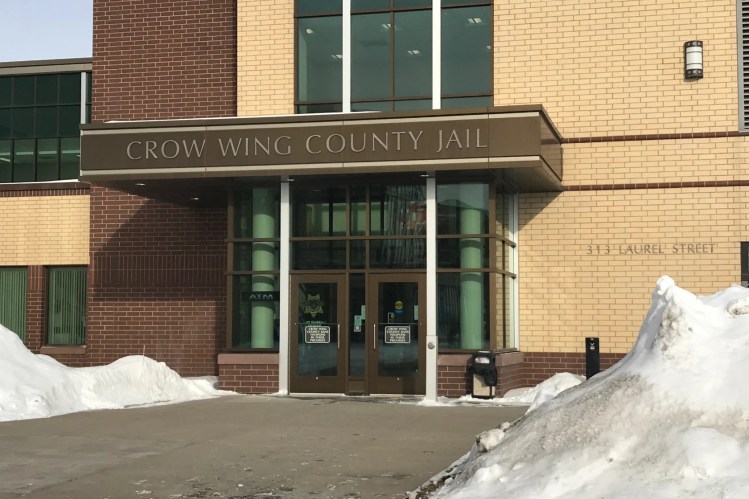
Crow Wing County Jail
Photo credit: Chelsey Perkins / Brainerd Disptacth

After the check, the guard helped me to my feet, and I shuffled behind him through a series of secured doors, down a long hall and into a large, dimly lit cell block that swallowed me in silence. “Panopticon, panopticon, panopticon,” I whispered to myself while I gazed around the three-story cell block in amazement.

My cell was at the back of the block, an area called Echo Unit. Beige cinderblock walls encased a stainless-steel sink and toilet that were spread apart like dog bowls on the kitchen floor. A small metal bunk with a thin, blue, vinyl mattress bracketed the back wall, offering no comfort whatsoever. Overhead, aquarium-hued fluorescent lights buzzed like a fly zapper. The guard told me to get some sleep, that someone would be back in a while to check on me.

Despair and the tragic events of the day forced me to the thin mat like the pulverizing move of a wrestler, and I was out cold. Hours later, I was startled awake by the jangle of keys clanging against the steel door, summoning the violent recoil of the lock. The guard gruffly ordered me to sit up for the first of what would be many breathalyzers throughout the night. I blew .29! At that level, it should have been very difficult to wake me up, but my 6’4”, 220-pound frame was used to metabolizing paralyzing quantities of alcohol. I crashed back on the mat and caught a few more minutes of sleep before the guard returned. Point two-one this time. Then, an hour or so later, a .16. “You’re staying put,” I’m told, “until you blow a .08.” Drifting back to sleep, an alarm soon blasted me awake, and fluorescent lights flooded the room. The bolt on my door recoiled violently again, and the guard asked if I want breakfast. I shook my head no and once more slipped into oblivion.

I drifted in and out of sleep throughout the day like a soldier recovering from shell shock with only the faintest notion of eating a dry white-bread-and-ham sandwich for lunch. Toward afternoon, the guard came back, and I blew .08. “Good,” she said. “Welcome back.”

The arresting officer came to my cell a few minutes later with a handful of paperwork. His report, I assumed. He told me he had tried to contact the judge to discuss my release, but considering it was Saturday, I might have to wait until Monday, when I would be placed at the top of the docket for a hearing. I nodded appreciatively, filled with contrition. He could tell that it was a new experience for me and projected an air of humility.

Now that I was back among the living, I buzzed the guard’s station and asked if I could make a phone call. I was given a handheld device that resembled a toy cell phone but provided no explanation or instructions. And the battery was almost dead. When I finally figured out how to navigate the BlackBerry-era, monochromatic display to make a collect call, I rang my wife. Straight to voicemail. Dammit! Is that my one and only call, I wondered. I tried again and failed again. The phone was out of juice, and I didn’t know if I would get another chance to call. I buzzed the guard again and asked what to do next. She offered to recharge it. An hour went by, and I buzzed the guard again and asked about the phone. This time, my wife, Paula, answered with a peppy hello. Clearly, she hadn’t listened to my message, so I explained the situation. “Oh, no! No, no, no!” came her response. Thinking it was my one-and-only call with the outside world, I asked Paula to call my boss and tell her I wouldn’t be in on Monday and then notify the resort where I was staying to explain the situation. It was only Saturday, and I had a long weekend ahead of me.

We said our goodbyes, and I scrolled through the phone to learn as much as I could as fast as I could, afraid the guard would quickly return to take away my only connection to the outside world. But I soon learned that I could keep the device, and I could call anyone as often as I wanted once I had money credited to the system to pay for the exorbitant per-minute calling costs. The device also provided me an account and access to the “Canteen,” where I could buy junk food and personal items, also at exorbitant prices. That’s when it hit me—how miserable it would be to be alone with no one to call and transfer money into your account for the simplest of items like a pillow or deodorant. My wife’s phone number was the only one I remembered, and there was no internet access on the device. If I didn’t have her, chances are I would have no one to contact for help. Commit a bigger crime with a longer sentence, and you could easily lose your job, be evicted, and completely disappear behind bars—a sobering reminder of how easy it is to lose everything based on one bad decision.
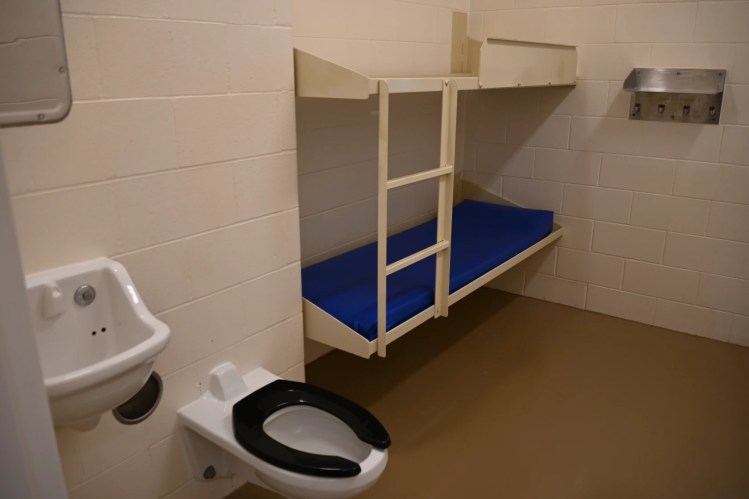
Crow Wing County Jail cell
Photo credit:Tim Speier / Brainerd Dispatch

As I sunk deeper into depression at the thought of being locked up with no one to help me, my cell was unlocked, and a female guard looked in and told me to grab my things, that I was being transferred to another area. I bundled up my sole possessions—a towel, a sheet, a cup, and a toothbrush—and followed the guard out of the cell block. I was led to another cell block and passed off to a guard who looked like Bob Odenkirk, who shot me a friendly smile and led me to my new cell at the very back of the block. I couldn’t help but wonder if they were trying to keep me out of sight to avoid interaction with the other prisoners. They clearly thought I was aggressive and possibly hostile since they kept me doped on Klonopin and Ativan. It seemed audacious for a small county jail in Brainerd, Minnesota, to drug inmates like me with benzos as a matter of course.

A year later, I came across an article about a 57-year-old man named Robert Arthur Slaybaugh who died in the Crow Wing County Jail after being jailed for a DWI in Brainerd, the second inmate death at the jail in six months. At the time of this writing, the cause of death was still pending autopsy, but it’s hard not to assume that the correction officers drugged Robert like they did me, ultimately bringing his heartrate to a dead halt. It crushed me to read that Bob loved the outdoors and worked as a camp director for 36 years, helping campers with cognitive and developmental disabilities. “There wasn’t a camper that walked the grounds that didn’t love Bob,” his obituary read. “His love for them all was a genuine blessing to the community and beyond.”

Later that evening, dinner was brought to my cell: a dry baloney sandwich with cold potato salad and applesauce. So, this must be what humble pie tastes like, I thought to myself as I ate in silence. After the guard collected my tray, I called my wife. She asked if I wanted to speak to the kids, and I felt shame well inside again. I said “yes” and swallowed hard at the sound of my son’s voice. I told him how sorry I was and that I would try to be better. I cracked a joke about the food, and he played along. My daughter was more reserved. I joked about my orange prison scrubs being my ideal uniform, and she let out a little laugh. (She likes to tease me about wearing too much orange.) I was surprised both kids were so comfortable talking to me about the circumstances. They had experienced a lot of grief in our household—drunken behavior, depressive episodes, vicious arguments—but this was a first. Of course, their mother had told them about the situation beforehand to lessen the shock.

As soon as she was back on the phone, we made plans for Paula to drive to the resort to pick up my things, drop off my glasses at the jail, and pick me up once I was released. Before we hung up, I apologized for my actions and promised to do better, to be better.

The guard gave a knock on my door and alerted me to my next med check. He escorted me to the nurse’s room, where my pulse and blood pressure were taken again. My heart rate was back to normal, and they gave me my regular dose of citalopram followed by new and unwanted dose of Klonopin and Ativan. I’d been without the antidepressant during the first two days of my incarceration, and I was worried about potential side effects, especially with the addition of the two benzodiazepines.

After I’m led back to my cell, Bob told me to grab my things because I was moving again, this time to a room with a special name that I now can’t recall, something like “The Cube.” A 2021 audit of the jail that I later found online referred to it as a “sub-dayroom,” with two cells and a shower that are behind a glass wall that looks out onto the community room where inmates gather to socialize or watch TV. The area had been designed to give residing inmates more space while remaining deliberately separated from the general population.
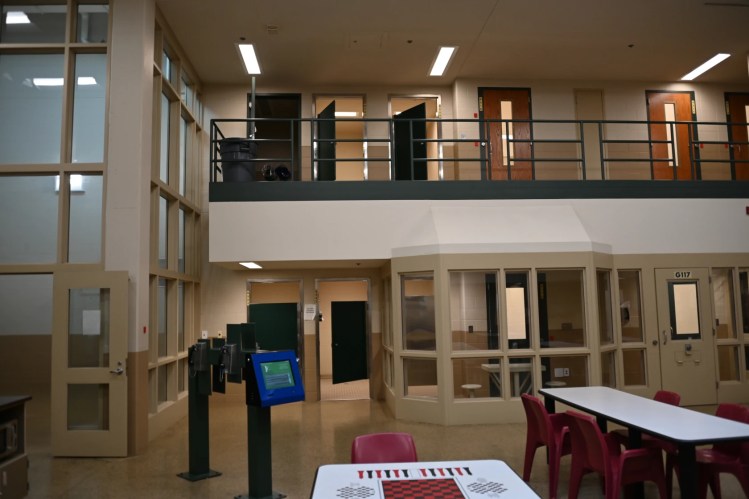
Crow Wing County Jail
Photo credit: Tim Speier / Brainerd Dispatch

Bob told me I had 30 minutes to use the general area in my glass cage and asked if I wanted my cell door open or closed. I opted to leave it open so I could catch a glimpse of the TV. Inmates on the other side of the cage gathered to watch a movie that didn’t interest me, so I gave Bob a buzz and asked if I could take a shower. The glass cage had a locked shower the guard had to unlock from his station, so at least I didn’t have to worry about dropping the soap or having any inmates offering to “get my back.” I hadn’t had a shower in two days, and the warm water relieved some of the stress I’d been harboring, even though the shower stall door left my head and feet exposed to everyone in the common area.

Rinsed of my stench and shame, I gave Bob another buzz and asked if there was any reading material available. A few minutes later, he swung by with a tattered Tom Clancy paperback, a John Grisham paperback, and a large-print edition of the King James Bible, all three with “Property of Crow Wing County Jail” stamped on the fore-edge. “Your pick,” he said, fanning the books before me like a street vendor. I chose Clancy—Splinter Cell: Checkmate—with a smirk and wry acceptance of my current situation and thanked Bob before retreating to my bunk to read. I’m an avid reader of fiction and non-fiction alike, but I’m no fan of pulp thrillers, mysteries, and fantasies that place entertainment over enlightenment. But I desperately needed a distraction, and the ridiculous reconnaissance of Sam Fisher, the main character, was enough to take my mind off the circumstances.

The Cell Block Meets Eastern Bloc

Delving into the melodramatic world of international espionage, I thought back to the only other time I’d been taken into custody. It was in Sofia, Bulgaria, in 1996. A group of friends and I, all recent graduates from a college on Route 66 in Oklahoma City, were walking through Sofia’s Battenberg Square on our way back to our apartment block from Kentucky Fried Chicken. Rudy, a native of Tampico, Mexico, was sporting a fedora and a Hawaiian shirt unbuttoned far enough down his chest to reveal a gold medallion of the Aztec calendar perched in a nest of black chest hair. Ted, a lifelong resident of Bethany, Oklahoma, was in tow, wearing his usual uniform—a shirt from our alma mater, Southern Nazarene University, tucked into acid-washed jeans. Dale, another resident of Bethany donning similar attire to Ted, was in lockstep with the group, only with lanky strides that resembled a rubber house cartoon character. Borderline emaciated due to health issues, Dale’s slight build barely seemed to support his giant head with its prominent dimpled chin, 1980s-style Coke-bottle glasses, and a helmet of Brillo-like brown hair that could put any televangelist to shame. And then there was me, a skinny, preppy wannabe decked out in J. Crew attire and rocking a brownish-blonde butt cut.

Strolling along and joking about all the mafia bodyguards and their sexy girlfriends gnawing on corn on the cob and deep-fried chicken from KFC, we were alarmed by the sound of a police siren behind us. We turned around to see a police truck approaching and heard an officer blurting out, Vasichki sprete! (“All of you, stop!) over the loudspeaker. We froze in our tracks. We had been in the country for nearly a year and had only a week to go before returning to the States, and we were finally experiencing our first run-in with the local police, whom we’d been warned to stay clear of by Bulgarians and foreigners alike due to their penchant for extorting bribes. Three police officers jumped out of the truck and demanded our passports, which, of course, none of us had on us. Rudy, the most fluent in Bulgarian, explained the situation, but the police were having none of it. They were taking us to the station, and we would stay there until we could procure our passports. The next thing we knew, we were being loaded into the back of the police truck and being whisked through Sofia with sirens blaring.
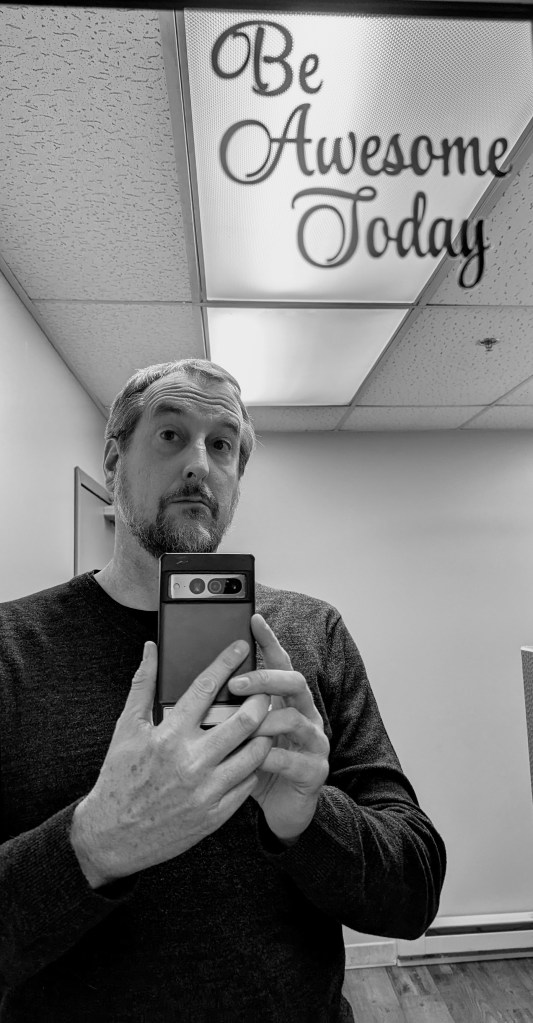
A selfie at Cuyuna Brewing Company
Words of encouragement in the bathroom of Cuyuna Brewing Company hours before my arrest.

At the police station, which happened to be right down the street from our apartment block, an officer lined Dale, Ted, and me along a wall and handcuffed a wrist on each of us to a bar above our heads. Rudy was taken to a nearby interrogation room, where we watched him struggle to answer a young officer’s questions in a third tongue. A guard sitting behind a podium with a McDonald’s golden arches sticker in the corner glowered at us as if we were hardcore felons. We decided to bide our time by playing a game of Rock Paper Scissors with our free hands. That only irritated the guard further, causing him to bark out some Bulgarian remonstration none of us could understand except for the phrase Glupavi Amerikantsi! (“Stupid Americans!”). A few minutes later, Rudy and his interrogator stepped out of the room, and Rudy informed us that he was heading to the apartment with two officers to collect our passports. That scared us since our Nigerian friend, Uz (as in “ooze”), was staying at our apartment for a few days while looking for a new place. Uz, or Uz the Blues as we called him, had been beaten up by Bulgarian officers that year, and we were worried they might use the situation as an excuse to arrest him under false pretenses.

Rudy was back in no time with everyone’s passport but mine. I had hidden it so well, he couldn’t find it. Had he found it, he also would have revealed the $1,000 in cash I’d stashed with it to travel to Italy and Austria the following week. If the officers spotted the cash, they may have been all too happy to seize it. Instead, Rudy brought my AAA international driver’s permit—a simple, bi-fold cardboard document with my picture glued on to match my scant personal details. Surprisingly, we were released from custody, and I couldn’t help but laugh as Rudy handed me my permit. That triggered a fit of rage from the guard who launched into an angry, incomprehensible tirade inches from my face. But the young officer announced we were free to go, and we walked back to our apartment block slightly bewildered and eager to reconnect with Uz, who remained safely sheltered on the sofa.

Those memories came flooding back as I read the ridiculous spy thriller on my third day in Crow Wing County Jail, desperately awaiting my hearing the following morning. By the time dinner rolled around, I had the luxury of dining at the park-style picnic table mounted to the floor outside my cell in the glass cage. I felt like a pariah eating dinner at the table in full view of the other inmates dining in the community room, like Hannibal Lecter in Silence of the Lambs or Billy Pilgrim in the zoo in Slaughterhouse Five.

And Now . . . Back to Reality

Later, when a new guard stopped by with my meds, I asked him why I had to take the sedatives, that I was concerned about the side effects of the drugs. He simply stared blankly back at me and said they were the doctor’s orders. I could either finish taking them the final day before I was released, or I would be placed with the general population, pointing to the community room where the other inmates appeared to be enjoying cards and conversation. “If I were you, I would just take them,” he concluded. “You’ll be more comfortable in here.” So, I gulped them down and lifted my tongue, per the arrangement, to prove I was doing as I was told.

Retreating to my cell, I sprawled out on the floor to stretch out the tension in my back and shoulders caused by the shitty mattress. Within minutes, another guard, this one female, peeked in and asked what I was doing. “Just a few stretches,” I explained as she motioned me up for my final med check that evening. She led me to the guard’s station in the community room and lightly frisked me, appearing reluctant to pat me down, before guiding me to the nurse’s exam room.

My blood pressure and heart rate had dropped significantly due to the Ativan, and for the first time since my arrest, I got to remove my contacts and put on my glasses that my wife dropped off at the station an hour earlier.

As the guard led me back to my cell, I asked about my hearing the next morning. He told me that I was on the docket at 9:15 in the morning, right after breakfast. It couldn’t come soon enough, I thought to myself, as he closed the cell door behind me. I called my wife and thanked her profusely for all she’d done. I had been harboring resentment toward her for reasons I won’t disclose here, so it was difficult to be entirely dependent on her at that moment. Regardless, I told her I loved her and, like every washed-out middle-aged man who’s been broken and busted, limply added that I would be more responsible in the future.

My call was interrupted by the guard’s 10-minute warning before “lights out,” so I closed my eyes and focused on my breathing to clear my head, meditating my way to sleep and a fresh start after tomorrow’s hearing. My sleep that evening was wracked with dystopian nightmares in which I was trying to navigate my way through an endless wasteland of abandoned warehouses, not knowing how I got there or where I was, all the while enveloped by a sinister presence.

I awoke the next day to the buzz of fluorescence, another massive pang of shame, and a guard’s curt announcement that breakfast would be ready soon. I stepped outside my cell and into the cage where a tray of cereal, fruit, and juice awaited. Am I in jail or kindergarten? I joked to myself. Judging by the voracity with which the men on the other side of the glass shoveled spoonfuls of cereal into their mouths, I was leaning toward the latter.

The morning guard stopped by a short while later to give me my benzos, which I had learned to take like a good little prisoner. The drugs worked their magic, and I was out cold in minutes. I was suddenly awakened to the ring of the phone. “Where are you?!” my wife pleaded. “It’s 9:20! You were supposed to appear before the judge at 9:15!”

I immediately buzzed the guard and told him I was supposed to be at my hearing, angry that they would have let me sleep through it without a second thought. The guard came to retrieve me somewhat lackadaisically, and we made our way to a video room where my wife, attorney, and the judge stared back at me from the screen. The rest was boringly procedural (thankfully), and the judge released me with no bail and on probation until my sentencing.

The Crow Finds His Purpose

Safely at home, the instructions from the attorney were very clear: Before the sentencing, stay out of breweries, bars, and liquor stores; take an alcohol abuse assessment; and complete a MADD Victim Impact Panel. The last assignment was offered by Mothers Against Drunk Driving (MADD) and was intended to help “drunk and drugged driving offenders understand the lasting and long-term effects of substance impaired driving.” It was a series of video interviews from people who lost loved ones to drunk and drugged driving that was deliberately designed to thoroughly shame viewers from ever committing the crime again—and rightfully so.

The testimony that hit me the hardest was by a mother who recalled experiencing unimaginable grief when she entered the morgue to identify her daughter’s body and was forced to wait behind a “long, white curtain.” The purity of the curtain as a shroud of immortality that concealed the reality of death was a powerful symbol. Graver still, the mother’s daughter was pregnant when she died, leaving the poor grandmother to lament the loss of not one, but two, lives. The pain was palatable.
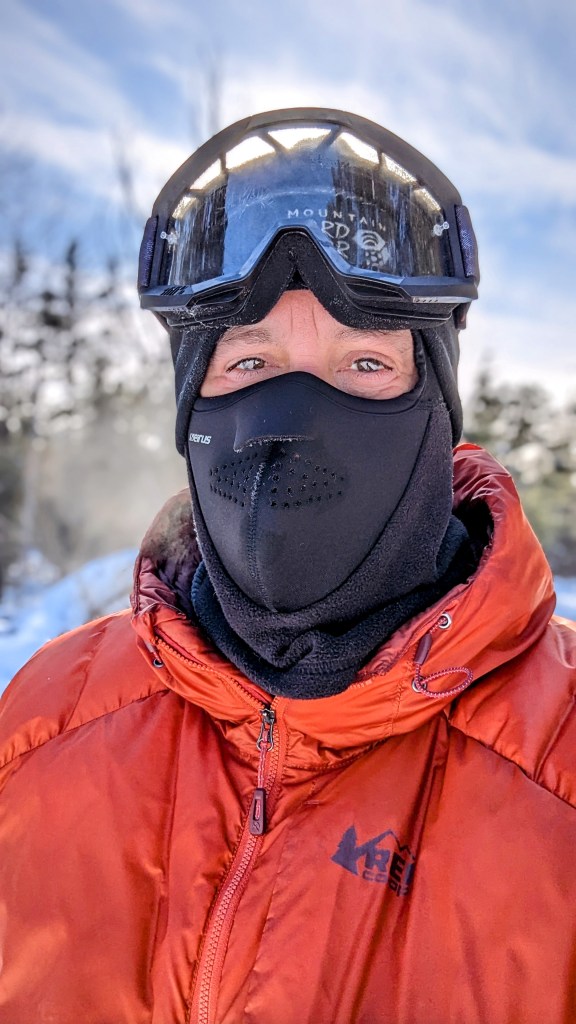
Fat biking in Cuyuna
Maybe the balaclava was foreshadowing. It’s similar to the mask certain types of prisoners might wear before going to jail.

My shame only grew more intense after watching the officer’s bodycam footage during the arrest and seeing how sloppy drunk and slurred of speech I was. The guilt prompted me to write a letter to the officer apologizing for my behavior. “Crosby is one of my favorite places to visit for biking and spending time with my family,” I wrote. “And the last thing I want to do is to put locals at risk or ostracize myself. In fact, one of the best qualities of the area is how peaceful and safe it feels.”

I sent the letter to my attorney, he added it to my case file, and I bided my time with non-alcoholic beer and lots of bike riding and hikes until my final sentencing three months later. Lucky for me, the harsher of the two counts, refusing to consent to a chemical or breath test, was dismissed, leaving me with a Fourth-Degree DWI conviction. The judge ordered me to pay a $610 fine and sentenced me to 90 days in the Crow Wing County Jail, officially stayed for two years on unsupervised probation. As long as I don’t get arrested for the same or a similar offense during that time frame, I would avoid an all-inclusive return trip to the glass cage.

Back in the Nest

The one-year anniversary of my sentencing has now passed, and I’ve been mulling over the lessons learned. Like Aandeg the Crow, I felt like I had no purpose when I was arrested for a DWI, but rather than searching out ways to see beyond my own nearsighted needs, I chose to fly headlong into clouds of alcohol-induced haze where I could remain temporarily shrouded from my worries and fears.

“There are but few important events in the affairs of men brought about by their own choice. Recognizing how much lay beyond my knowledge was what made space for growth and surprise, and kept me usefully in,” Pico Iyer writes in The Half Known Life. I clearly brought about these series of events by my own choices and actions, but that search for something more has led to growth. And, if I hope to retain any sense of magic and wonder in that snowy landscape where I ended up behind bars, I’ll take heed in Iyer’s discovery that “[a] true paradise has meaning only after one has outgrown all notions of perfection and taken the measure of the fallen world.” During those three full days in jail, I took measure of my failures and realized the true freedom and bliss of riding my bike through the woods on a snowy day. To me, that’s paradise.

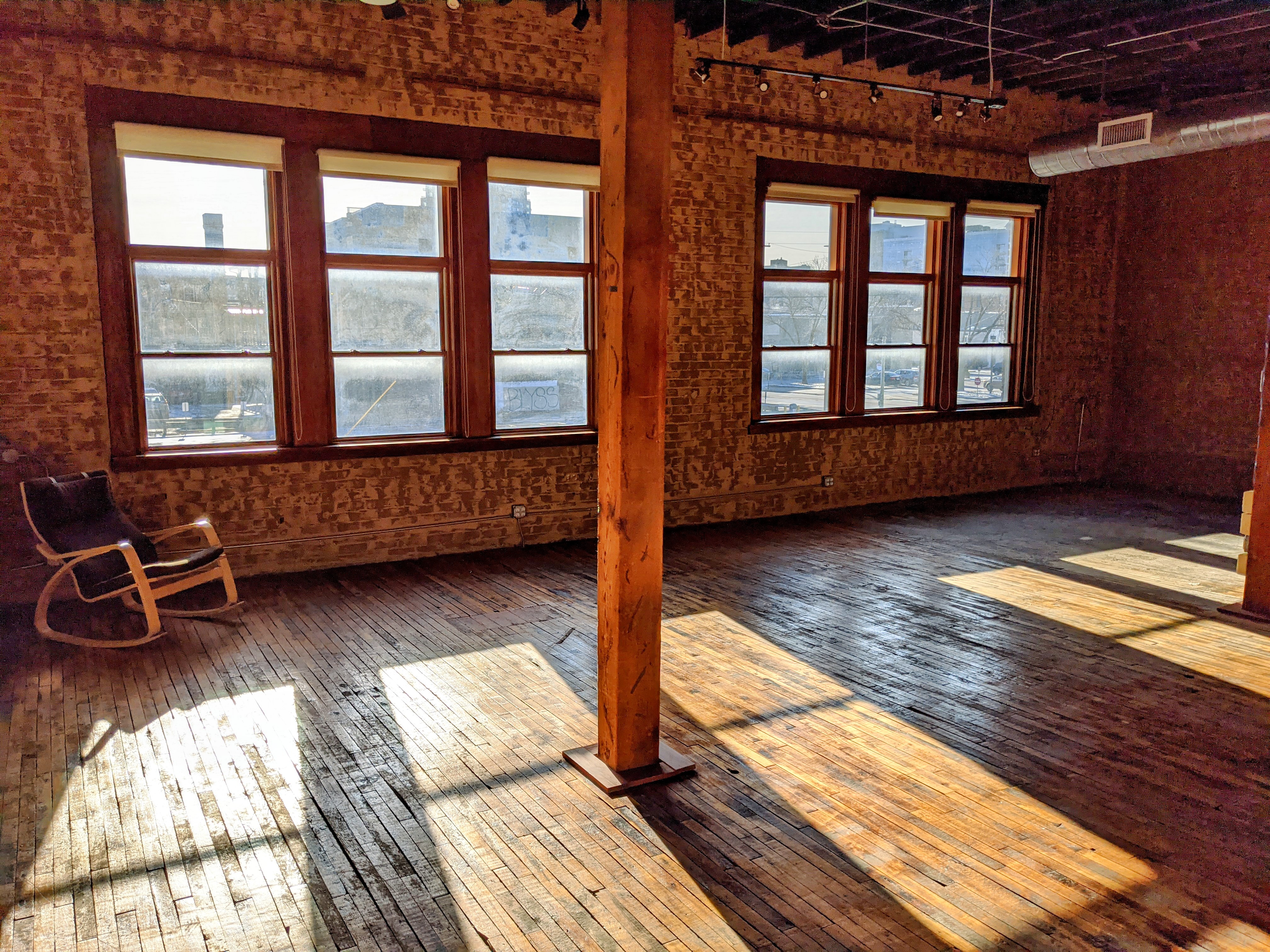
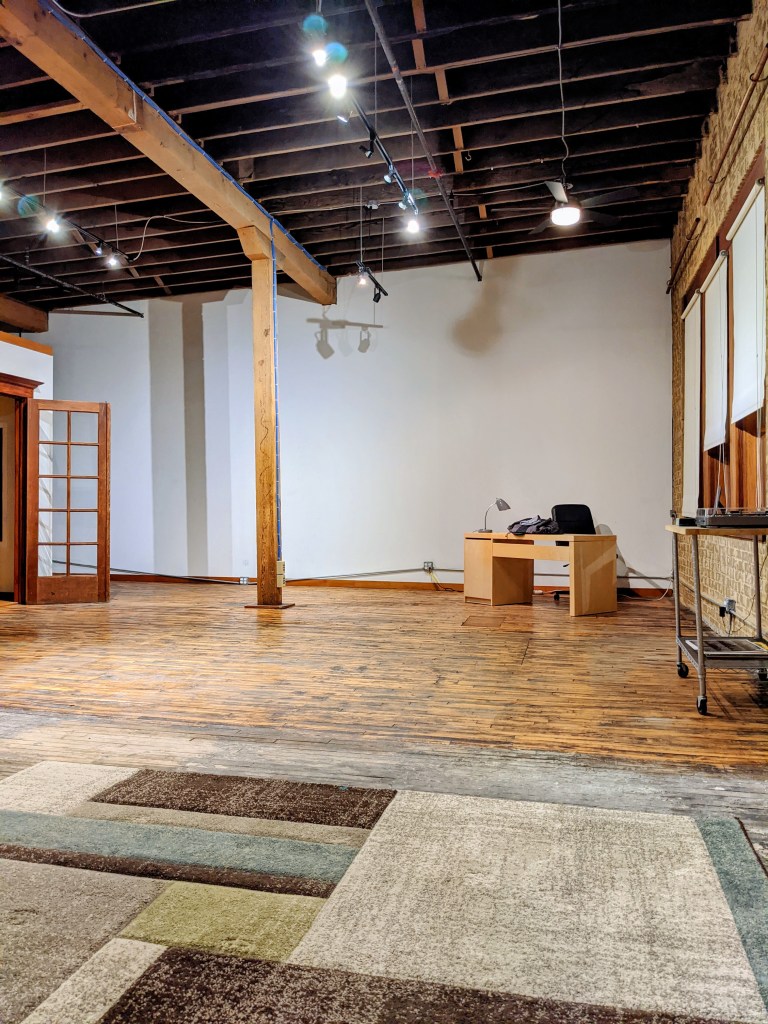
I typed the last words of this essay at a writing studio in downtown Minneapolis on the one-year anniversary of my arrest, gazing out at the fluorescent purple glow from the Vikings football arena. On my way out, I fed two quarters into a poetry gumball machine stationed in the lobby to raise money for the Minnesota Prison Writing Workshop. A plastic capsule plopped in the machine’s metal mouth. I cracked it open and untied the tiny scroll inside: a poem by Larry Levis called Make a Law So That the Spine Remembers Wings. I stand there and read . . .

So that the truant boy may go steady with the State,
So that in his spine a memory of wings
Will make his shoulders tense & bend
Like a thing already flown

It was time to fly on.
Featured

The Nervous Secretary

Part I

Everyone liked him, treated him like their brother. It made me mad. My face got too warm, and my breath grew heavy and hard to swallow. When others showed up, I was immediately left out, like the kid who once puked in class and was now shunned by the other kids on the playground during recess.

I hated him most when anyone else showed up and wanted to play – the times when I had no choice but to sulk at the perimeter of the field or driveway or ditch or neighborhood store. I mean, I couldn’t just join them. That would be too needy. Besides, the kids who showed up and interfered with our time together didn’t even acknowledge me. Chuck didn’t either – never glanced my way, even knowing what he knew about me. Not even after those times we played husband and wife, when we stripped naked and crawled into his twin bed, lying there next to each other without moving because that’s what we thought married couples did. At least those moments ended in awkward laughter, in recognition that we were best friends just curious about being adults.

I wasn’t a loser. I could run fast, do tricks on my bike, hit the net. I had trophies for sports, mostly basketball. I had new clothes, the best tennis shoes. I lived in the biggest house on the block. My dad drove a Mercedes! And I could fight when I had to. Or, at least I could fight Chuck. We would fight each other to show off for the older kids in the neighborhood, punch each other until our faces were covered in blood and tears just to earn a few minutes of attention from the older guys in the neighborhood.

The main problem was, I was skinny with a bad haircut, and I usually didn’t want to draw attention to myself. Chuck was stocky, brown-haired, and clever. Not to mention that I always had to go to church on Wednesday nights at the crazy Nazarene place across the creek while Chuck stayed out late, shadowing the older kids before heading home to watch HBO.

That’s what sinners did, my mom said … they watched HBO. There was sex and violence and bad words on HBO. She didn’t know that I could see boobs on the snowy Lifetime channel at our house if I was willing to sit through an hour of adults talking about boring stuff and squint my eyes really hard when a woman began unbuttoning her shiny shirt.

But it didn’t really matter to Chuck if I broke the rules or not. When other kids came around to play, what I had done, or what I had, or how close Chuck and I had been earlier in the day just disappeared into thin air, and I was just some skinny-ass kid who didn’t get all the jokes or know anything about the best TV shows. It didn’t even matter that I had one of the first Ataris on the block.

Being left out made me embarrassed and angry. Whatever good thoughts I might have had disappeared as soon as I was rejected. Every time I was excluded, my anger grew, and I carried it inside me until I had Chuck to myself, and I could call him out for being an asshole.  

There was one time that I’ll never forget. Chuck rode to my house after playing with one of his other friends from school. I was in the backyard playing on the Jungle Gym. He started bragging about seeing Star Wars and brought up the Jawas.

I said, “Oh, yeah, the Jawas. They’re bad.”

“No, they’re not,” Chuck fired back. “They’re friends with Luke Skywalker!”

“Yeah, but they captured R2-D2 and C-3PO,” I yelled in defense. “They were held hostage by the Jawas!”

“Then why did they give them back to Luke, you idiot!” Chuck retaliated, a smirk spreading across his face.

“I’m not an idiot,” I screamed, grabbing a rusty Jungle Gym cross bar that had long ago been dislodged and fallen to the ground. “Say it again. I dare you!” I challenged him. His smirk grew wider.

“Idiot.” He didn’t even blink when he said it.

I swung the bar and watched blood blossom over Chuck’s eyebrow as he swayed in place. Fear shot through me, and I wanted to run, but I just stood watching Chuck stagger in circles. Then it hit me. Watching Chuck stumble away, I realized how bad he was hurt, and I panicked. I didn’t know what to do, so I hid in a trashcan until I heard my mom yelling my name, trying to find me.

The next day, I was standing next to Chuck in the hospital, ashamed, watching him unwrap the Mr. Snowman Sno-Cone Maker my mom made me give him as an apology. The stiches in his forehead were the weirdest thing I’d ever seen.   

I always remembered that fight whenever Chuck made fun of me. Like that time on the Ferris Wheel at the fair. It stopped to let on new riders when our cart was at the very top. We could see everything – the Tilt-a-Whirl, the Gravitron, all the tents with games, and the pavilions full of mud-caked pigs and cows. Chuck started swinging the cart back and forth and rocking it from side to side. I gripped the locked door with all my strength and pleaded with him to stop. He laughed and blurted out, “You look like a nervous secretary!”

“What are you talking about?! Why do I look like a secretary?”I demanded, struggling to come up with an equally embarrassing insult. Am I really that nervous, I wondered, replaying all the times I had been scared or intimidated in front of Chuck.  

There were those times I wore his mom’s nightgown when we played husband and wife. That time my football pants dropped to my ankles when I was running for a touchdown during our one-on-one scrimmage in his backyard.

The worst was that time when I went to Walmart with Chuck and his mom, and I was too scared to ask anyone where the bathroom was. I couldn’t hold it any longer and let the warm piss stream down my leg as I walked figure-eights around the greeting card aisles to spread out the stream, hoping no one would notice the yellow trail as my jeans turned dark blue. Back in the car, Chuck’s mom sniffed the air dramatically and stared us down. “What in god’s name is that smell?” she yelled. I hung my head and tried to ignore the stickiness of the pee on my legs as it sank into the velour seats of the LTD.

Then there was the fight on the playground after Chuck mocked me during a football game. He made some joke about how skinny I was, a crowd favorite. The other kids would say things like how they couldn’t even fit their dick into one of the legs of my jeans. But it stung worse when Chuck insulted me, even if we were only friends in the neighborhood and not at school.

I yelled at Chuck to shut up. “What are you going to do about it?” he responded, all of the kids surrounding him and challenging me to say something else. So, I did what was expected. I stepped up and shouted, “I’ll make you shut up!” before giving him the biggest shove my skinny arms could muster.

The rest of it played out as usual. We shoved each other back and forth waiting for the other one to make the first move, just like we did when we staged fights for the older kids in our neighborhood. Then Chuck hit me with a surprise hook to the eye, and I was on my ass.

Ms. Judy, the playground supervisor, sprinted toward the football field, the short gray curls on her head bouncing in rhythm with the puffs of her leathery cheeks as she blasted her whistle to break up the fight. By the time she reached me, the sting in my cheek started to burn. Ms. Judy helped me to my feet, and I glared in Chuck’s direction, watching him bask in the laughter and praise of his admirers. The recess bell rang, and all the kids ran back to the school building, leaving me to my shame.

The fight was old news within a week or two, and we were back to roaming the neighborhood on our bikes, me pretending I was Officer Jon Baker and Chuck pretending he was Officer Frank “Ponch” Poncherello from the show CHiPs.

That was before he tried to stab me with a screwdriver, and the remaining memories of our friendship blurred into a fog.    

Part II

Long, hot showers were an essential morning ritual, the only thing that distracted me from the petty frustrations that greeted me at daybreak … the dinging of disturbing news alerts on my phone, the dog chasing a rabbit down the alley when I let him out to pee, the constant shooshing sound the toilet made because I was too lazy to fix it.

I let the water cascade down my lanky frame, polishing and refining me, while I stood stone-still in the stream. If I could stand there forever and never work another day as a temp, I would gladly let the water shrivel me into a human prune. This was what it was like to be on the verge of 50 and still struggling to land a decent job.

Now that my anxiety had seeped through the shroud of water, I toweled off and stared in the mirror, trying to see beyond my pockmarked face and lazy eye to a time when I believed I could be anything I wanted. Back when I believed that I could simply shrug off a run for president and focus on winning a Grand Slam. Anything I wanted to be, huh? Not in this life. What I could be is divorced, barely employed, lonely, envious, and bitter.

If only I would have finished my goddamn dissertation, I would have been fine. Teaching freshman courses at a community college would have been better than this shit. Why couldn’t Hannah have waited to leave until I was finished? She could have spared me 12 years of failure.

My new temp job would start in 30 minutes, and here I was being sucked into the vortex of bad memories. If only she could see me now! A temporary executive assistant with Flathead’s Restaurants, Inc.! Pathetic.

I knew the gig wasn’t going to go well, but I didn’t give a shit. I wanted to get in and out as quickly as possible and get back to pushing papers at a small family business or nonprofit. Forcing fake smiles to overpaid executives named Chaz and Delaney was one of the worst punishments I could imagine.

Flathead’s wasn’t quite an Applebee’s or a Chili’s, but it was popular enough to draw a sizable number of teetotalling church groups, libidinous convention-goers, and awkward high-school first dates. All I really knew about the chain was that they built their reputation on drinks and food specials with quirky names and a carefully curated assemblage of American kitsch. Every restaurant was adorned with shiny chrome car parts, glossy pictures of muscle cars and pick-up trucks, bald eagles, American flags, logos from tool manufacturers, and pin-up calendars featuring wrench-wielding bleach-blonde bikini models sporting ‘80s bangs and strategically placed grease stains. The drinks had names like The Right Hook, Soiled Denim, and Rusty Screwdriver, while the desserts were labeled to sway the ladies: Spoon for Two, Silk Blouse, Cuddle Time. How they got away with such blatant, chauvinistic bullshit was beyond me.

I was 15 minutes early when I pulled into the far corner of the headquarters’ massive parking lot – a sea of mostly new luxury sedans and SUVs. I straightened my tie and tried to summon the delusional confidence I had when I posed for my senior high pictures in a double-breasted suit from Bachrach, looking like a sleezy divorce attorney.

Inside the massive glass lobby, I lumbered toward the front desk and was greeted by a beautiful receptionist. “Hi, Dave! I’m Sam. It’s great to have you on board!”

“Hey, uh, thanks. How did you know my name?”

“I have your profile right here.” She nodded at one of her three massive monitors. “I knew you would be arriving at any moment, so I wanted to give you a warm Flathead’s welcome!”

She pointed me to a seating area under a gigantic staff portrait depicting hundreds of happy, shiny people with gleaming teeth. “Sit tight,” she chirped, pivoting and entering an aquarium of offices across the lobby.

Sam, I repeated to myself, watching her walk down the hall, owning the space around her. The golden-brown hue of her complexion, her athletic figure, and her ebullient demeanor gave her the air of a celebrity. It was unfair how much style and grace beautiful young people have, I glowered, catching a glimpse of the bluish bags of skin melting away from my eyes in the reflection of my face in the retracting glass door.

A few minutes later, Sam bounced back into the lobby, holding the door open and extending her upturned hand into the suite of offices like the happiest maître d in the world. She maintained eye contact and a soothing smile while pointing me to the conference room at the end of the hall.

I started down the hall, eyes fixed firmly on the floor. I made it my habit to not make eye contact with anyone until I was formally introduced. First impressions seemed more equitable that way. If I caught a glimpse of someone giving me side-eye or a sneer before I met them face to face, I would distrust them from that point forward, which was a bad position to be in from the standpoint of office politics.

Glancing up as I crossed the conference room threshold, I went numb. Staring back at me from across the room was a shit-eating grin I hadn’t seen in over 30 years. It was Chuck.

“David!” he belted out, launching himself from his seat to shake my hand. “Jesus H. Christ, when was the last time I saw you?! Back at that bar not long after college, right?”

“Chuck,” I shot back, hesitantly. “Yeah, I believe so. You were with Doug, J.P., and Mike. You guys told me about your jobs in sales. It was a pretty quick conversation, really.”

Chuck stared straight through me like he was watching the memory reoccur right behind me.

“We got pretty damn shit-faced that night, so I’m not surprised I couldn’t carry on a conversation. It was a wild time. Fresh out of college, single, and making six figures. We partied hard almost every night. You remember how it was?”

“Ha, ha. No, not quite. I was broke and engaged, a bad combination.” I recounted my brief engagement, my time in grad school. Chuck nodded vigorously in response.

“As you can tell, my job situation hasn’t been all that great, so I’m really grateful for this opportunity. All of my professional connections have dried up. All I can find are temp jobs,” I explained.

“Well, my friend, I think your luck has finally changed. I’m glad to have you on my team. We’ll be sidekicks just like the good ol’ days,” Chuck reassured me, planting a loud thwack of his palm square in the middle of my back.

He eased onto the conference table and punched a button on the phone. Sam answered, and Chuck told her to hold the private room at the flagship restaurant down the street in 30 minutes.

“It’s a very special occasion,” he noted. “Oh, and Sam, will you please escort David there and give him a quick rundown of the business? The rest of us will catch up with you in a few minutes. We need to circle back with a couple of investors about the East Coast expansion.”

“Of course!” Sam snapped back. My god, even her voice was appealing!

Chuck grabbed my shoulder and squeezed a few times like a little league coach reassuring one of his players.

“It’s on the early side, but I like all of my new team members to get a taste of what Flathead’s is all about.” His eyes sparkled like a proud new father’s. “I’m sure you’ve been to one of the restaurants, and I know what you’re thinking – yes, the décor and names of our items are corny, but it’s been a wildly successful branding strategy. You’ll see for yourself soon enough. Make your way over to Sam, and we’ll join you two in a bit.”

Holy hell! I thought as I made my way back to the reception area. Does anyone know I used to lay naked in bed with the CEO of this company? Does anyone have a clue that their boss is the same kid who tried to stab me with a screwdriver when we were 12?

It suddenly occurred to me where all of the stupid names for food and drinks came from. Chuck had institutionalized his mockery of me and my most humiliating moments.

Sam smiled as I approached and guided me to a car idling outside the lobby.

“Soooo … how did it go?” she inquired. “Did you two get along okay?”

“Ha, ha, funny thing,” I muttered. “I had no idea Chuck was the CEO of this place. We’re actually childhood friends. We used to ride our bikes all over the neighborhood pretending we were Jon and Ponch from CHiPs.”

“No way!” Sam shot back. “You guys were friends as kids? How bizarre! What is CHiPs?”

I explained the TV show from the 70s and early 80s about motorcycle highway patrolmen in California. “I was Jon, the blonde one, and Chuck was Ponch, the brunette. Ponch was considered the sexy, suave one, always better with the ladies.”

“Yeah, I bet Chuck really identified with that,” Sam said with a bitter laugh. “By the looks of it, though, you’re no longer a blonde,” she added, nodding at my bald scalp.

“Everything is fleeing me these days,” I mused. “But it is definitely surprising to accidentally reconnect with Chuck after all these years.”

The hostess greeted us and led us to a private room in the back of the restaurant, past booths framed with ’57 Chevy bumpers and brawny hub caps from muscle cars – a veritable roadside attraction of kitsch reverberating to ’80s rock blaring from the speakers.

Chuck’s VPs were the first to arrive after we were seated. All 10 of them: Development, Operations, Marketing, Sales, Strategy, Innovation, Human Resources, Finance, Stakeholder Relations, and Diversity and Inclusion. Seating themselves without looking up, they face-planted themselves into their phones, scouring the day’s business communications.

Chuck appeared in the doorway a minute later, backlit in the glow of neon signs that boasted offensive mottos like “It’s Better Where It’s Wetter” and “If There’s Turf on the Field….” He immediately turned his attention to Sam.

“So, Sam, what have you shared with our newest employee?” Servers streamed in behind him and dispensed small plates stacked high with withered, rancid-looking salads.

“We didn’t have much time to talk before everyone else arrived,” Sam demurred in a tone that instantly undermined the beauty and confidence she projected when I first met her. “I told him about our generous medical leave plan and was just about to explain the Wet Pants policy.”

“Perfect!” Chuck replied. “The Wet Pants policy is one of my favorites. Does that sound familiar at all, David?” He stifled a laugh while scanning the room. “That time in Walmart?”

All eyes in the room were on me.

“I … uh … well, yeah. How could I forget?” The heat of the lights seemed to intensify, and my head practically ballooned with embarrassment.

“Are you guys going to fill us in or not?” a fiercely attractive blonde belted out before stuffing her mouth with the sad salad greens. I glanced at the menu and noticed the name: Greens with Envy. How appropriate?

“This guy,” Chip pointed in my direction, “should tell the story. He’s the inspiration behind the Wet Pants policy. You can tell by the look of him, can’t you?”

Everyone at the table gawked at me conspiratorially. Except Sam. Sam looked concerned. “What’s the Wet Pants policy?” I asked cautiously.

“We have a little incentive program here at Flathead’s. You see, I don’t like my employees taking excessive bathroom breaks during the day. It breaks their rhythm and hampers productivity. Fuck OSHA and their sanitation standards! If you can’t take care of your business before entering mine, you’re not fit for this company. And, David, it’s all in tribute to you.”

“I don’t understand. How does that relate to what I did in Walmart when we were kids? I pissed my pants because I was scared to ask for the bathroom. I had no options. You have plenty of options at your headquarters.”

The posture of everyone around the table straightened in unison as Chuck smiled to himself. He slowly made his way to a framed picture of various hand tools displayed taxonomically like an insect chart. He studied it carefully for a few minutes.

“I never told you what happened after we returned home from Walmart, did I?” Chuck’s sinister smile morphed into a glare. “Your humiliation was public, yes, but my humiliation was just beginning the second you jumped out of the car and ran home. My mother was enraged. She told me to stay in the car and not come out until she came to get me. It had to be like 100 degrees that day! Your piss soaked into the velour seats. The entire car smelled like a nursing home!

“You weren’t the only one who had to use the bathroom at Walmart, you know. But, unlike you, I held it. In the store and all the way home. I begged my mom to let me leave the car. I begged her to let me go to the bathroom, but she slammed the door on me, ignoring my gags from the hot, sour fumes. I swore then and there I would get back at you.”

“Is that why you stopped talking to me?” I stared at Chuck, confused. He scowled back. The VPs stopped eating their salads. Sam – poor Sam – looked desperate to escape.

“Oh, that wasn’t the end of it, David,” Chuck resumed. “After that, my mom put latches and combination locks on all the bathroom doors in our house and made me start doing Kegels three times a day. I was only allowed to use the bathroom once in the morning and once before bed. If I had to piss or shit any other time, she would hand me a rubber band or tell me to stick my thumb up my ass. That didn’t change until I graduated high school and left for college. By then, I could hold it with the best of them. So, maybe you and your tiny bladder did me a favor.”

I was dazed and speechless. Chuck smirked and glanced around the room. The VPs nodded admiringly. Sam lowered her head, clearly flustered. She stood suddenly and asked to be excused. She was out the door before Chuck could respond.

“It looks like someone didn’t understand the moral of the story,” Chuck quipped, settling his gaze back on me.

“I … I had no idea,” I managed through a cracked voice. “My god! Why didn’t you ever say anything? Is that why you tried to murder me with a tool?!”

“You mean this?” Chuck sneered, pulling a long, rusty screwdriver from the inside pocket of his suit jacket. He held it above his head and examined it in the light before placing it on the table in front of him. The VPs, still engrossed in our perverse scene, began tucking into their salads again.

“Is that the one? That can’t be the same one. Why the fuck are you carrying it around?!” I could feel sweat blooming in my armpits, my heart trying to beat its way out of my chest. “I don’t … I don’t understand the point of all this?” I mumbled. “Why didn’t you say anything? Why here? Why now?”

Sam stepped back into the room and froze at the sight of the screwdriver.

“Sam! So nice of you to return after your unexcused bathroom break,” Chuck bellowed. “You realize that HR will have to write you up for this?” He was hunched over the table, arms spread apart, palms down, the screwdriver in the middle, glancing at Sam, then me. The VPs were motionless.

 “I’ve held on to this memento, David, because it symbolizes power. A judge uses a gavel to keep order. A king uses a scepter to control his kingdom. I used this screwdriver to build my business. And it reminds me that I have the power to take another life – namely yours. I probably would have done it that day if the older guys hadn’t intervened.

“You always got everything you wanted. Your big house, fancy cars, the beach vacations. I despised you for all of that. Or maybe I just realized how weak you were … you are.”

“You were my friend,” I pleaded. “We were friends! And I was the one who was jealous of you. People liked you. Girls liked you. You were better at football. Your mom let you stay up late, watch whatever TV shows you wanted, eat Oreos whenever you liked.”

The VPs were entranced. I glanced at Sam for a cue about what to do. Her face was rigid, locked in place with anger.

“Let’s play a little game to initiate your new role as my secretary here at Flathead’s. Have a seat.” He pulled out the chair in front of him and motioned to it. “I’ll be nestled right behind you, just like old time’s sake.”

I did a quick mental calculation of my bills and debt. I could knock out all of it in less than a year with what they would be paying me here. Or I could just walk away from this nightmare scenario and try to forget this ever happened.

I stepped forward, eyeing Chuck timidly, and reluctantly settled into the chair.

“Great!” Chuck cheered, clapping his hands together in a celebratory clasp. “Let’s play some pinfinger!”

Chuck reached down and gently placed my hand on the table, spreading my fingers like he would spread the legs of a lover.

“Just remember …” he snickered, slowly tapping the screwdriver between my fingers. “Don’t move.”

Building speed, he began to alternate between fingers, planting the screwdriver deep into the table with each swift stab. Outside thumb to outside middle back to inside thumb to inside ring. Inside ring to inside index. Inside index to outside pinky and all the way back to inside thumb.

The VPs huddled around one another on the opposite side of the table. Sam took a step back, away from the group, with an alarmed expression. The VPs began to cheer on Chuck as he stabbed at the spaces with a furious pace. I tracked the shaft of the screwdriver and imagined it boring a hole into the meaty part of my palm between by thumb and index finger, the “webspace.” I closed my eyes and envisioned my impaled hand dissolving into a spider’s web around the screwdriver.

A drop of sweat hit my neck, and I flinched, causing Chuck to nick the tip of my index finger with the screwdriver blade.

“Shit!” I cried in pain. A small flower of blood bloomed around a patch of flesh pinned down by the screwdriver. I shut my eyes and gritted my teeth, willing away the pain.

My eyes flashed open to find Sam screaming and lunging across the table. I turned to see Chuck’s raised arm, just beginning its descent, as Sam careened into my lap, throwing our combined weight into Chuck and toppling him backward. The screwdriver bounced off the table just as my head hit the floor and Sam rolled to my side.

Chuck was back on his feet in a split second, grabbing me by my collar and belt and flinging me onto the table, his fist suddenly in my line of vision. I felt the old, familiar thud in my eye socket, and everything went black, yells and shrieks dissolving into muted echoes.

When the light returned, I saw a blurry figure hovering over me, fists in the air. I gasped for breath.

Why couldn’t I move? Was I paralyzed? Something was on top of me, digging into my shoulders, pinning me to the floor. The smirk on Chuck’s face staring down at me came into focus just in time for me to see him crane his neck and the screwdriver sink into the base, just above the shoulder blade. A sucking, gurgling noise erupted from his throat, and a torrent of blackish-red liquid spilled from the wound into my eyes.

My eyelids sputtered spastically, desperate to blink out the sticky-hot substance, catching glimpses of Chuck flailing at the screwdriver. Blood spurted from the side of the object like a garden hose being crimped and released, crimped and released. The room was turning purple.

Chuck rolled to my side, and I gasped for air. His breath thick on my neck, the heat of it matching the pool of blood pooling beneath me. His eyes fluttered, and the screwdriver, lacquered with blood, sunk deep into his neck as he pressed himself into me. Chuck forced his eyes wide, and in a horrifying rasp, mouthed the words, “I have … always … loved you.”            

I stared into his vacant eyes and felt his warm, wet arm drop across my chest and go limp.

Sam stared down at us, her face splattered and vengeful.  

“That’s for raping me in your office, you motherfucker!” she screamed, shaking with rage. She staggered to a corner of the room and collapsed, a heap of anger and tears.

I crawled out from under Chuck’s arm and leaned against a wall as paramedics and police officers barged into the room. One dove toward Chuck and applied pressure to his neck. The other directed a bright light into my eyes, asking a flurry of questions I couldn’t fully register.

I looked up as Chuck was being lifted onto a gurney, his head plopping to the side with the screwdriver still protruding from his neck, blood flowing like lava from the cone of a volcano. We were eye to eye, but his dead gaze stared past me, the same way he had back in the conference room. What was he looking for? Even in death. Was it fate?

Glancing over my shoulder, I noticed a police officer handing Sam a towel. She dabbed at the blood, dazed by death.

“I’m afraid I’m going to have to place you under arrest, Miss,” were the only words I overheard as two officers lifted her to her feet. Sam didn’t blink as they cuffed her and escorted her away.

Another cop tossed me a towel. “You look like something out of Fangoria!” he jeered. I searched for my phone in my pocket, pulled it out, switched it to selfie mode, and saw what he meant. My entire face was caked with maroon blood from Chuck’s gushing wound. I looked like a beet with eyes.

“I’m going to tape this place off and get Forensics in here,” the officer informed me. “You just sit tight for a minute.” He shook his head, then added a tepid, “Sorry, buddy.”

Wiping the blood from my face, I focused on steadying my breathing, counting a cadence in time with the rhythmic movements of the emergency responders. The image of Chuck’s sputtering mouth started to sear its way into my memory.

A waiter hip-twisted his way through the doors, a silver-covered platter perched on his upturned palm. A diffuse fog of neon seeped in behind him.

“I’m not supposed to be in here,” he leaned in and whispered in my ear. “But Chuck had this specially made just for you. He told me to be sure you got it no matter what. It’s called Chuck’s Roast … Rare with Flare.”

He placed the dish in front of me, reached into his apron, pulled out a gold screwdriver, and with a quick flourish, removed the platter’s cover before leaving the room. There on the plate was a giant chunk of rare meat on a bed of mashed potatoes, all smothered in red-eye gravy. I gagged and spat a wad of bloody bile into the gelatinous mound.

I picked up the screwdriver and held it in front of me. Encircling the handle in dainty, cursive script was a message. It read, “To my one and only nervous secretary, try not to choke on my meat!”

Jesus! What a first day!

Featured

For Whom the Writing Goes

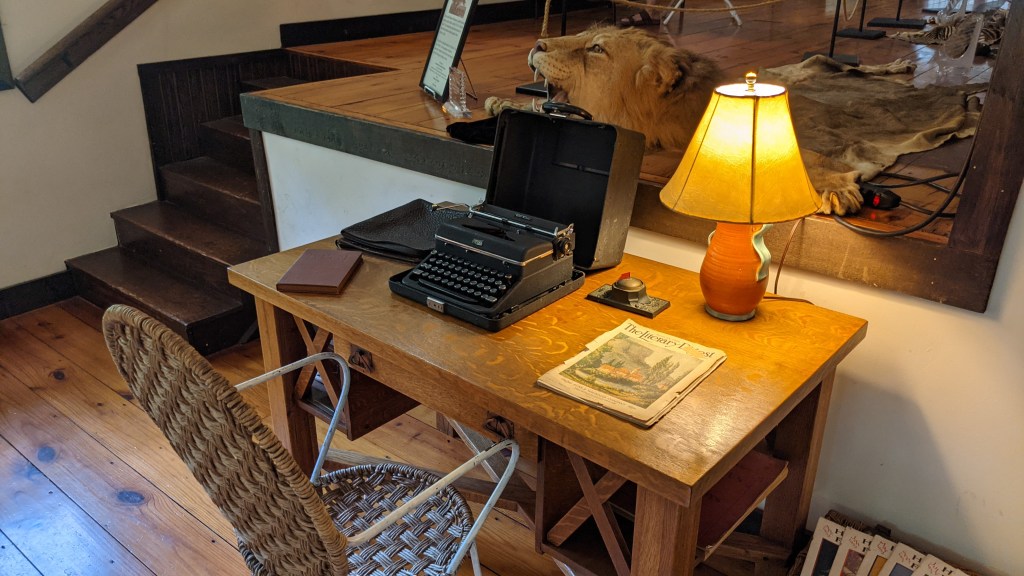
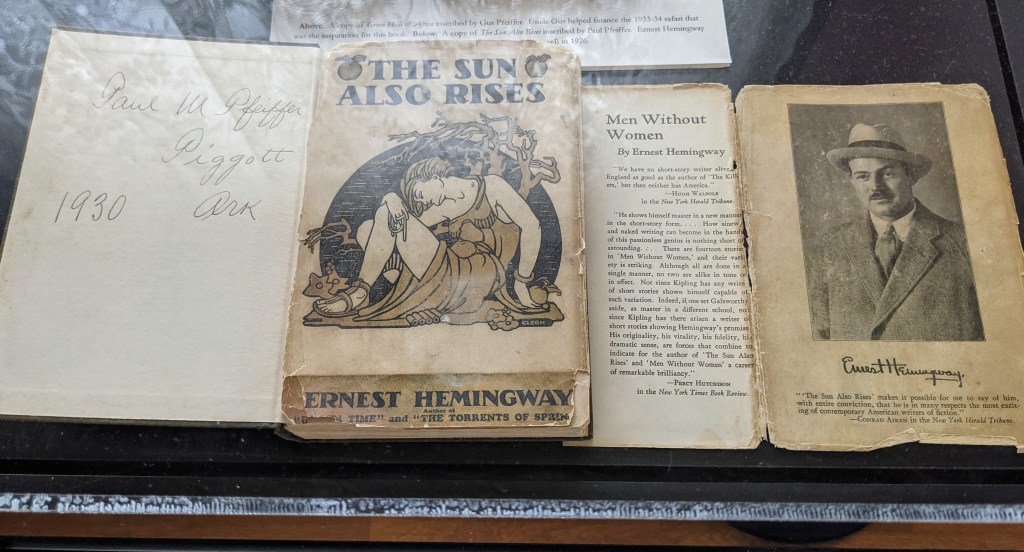
Hemingway almost always wrote while standing, but this is the view you’ll find in his writing studio above the barn at the Hemingway-Pfeiffer Museum and Educational Center in Piggott, Arkansas. The author wrote most of A Farewell to Arms in the studio during his marriage to Pauline Pfeiffer.

It’s 1:30 p.m. on Monday, July 19, 2021, and I’m hiding in the outdoor restroom of the Hemingway-Pfeiffer Museum and Educational Center in Piggott, Arkansas. It’s the first day of a writing retreat hosted at the center, and I’m supposed to be working on “my art.”

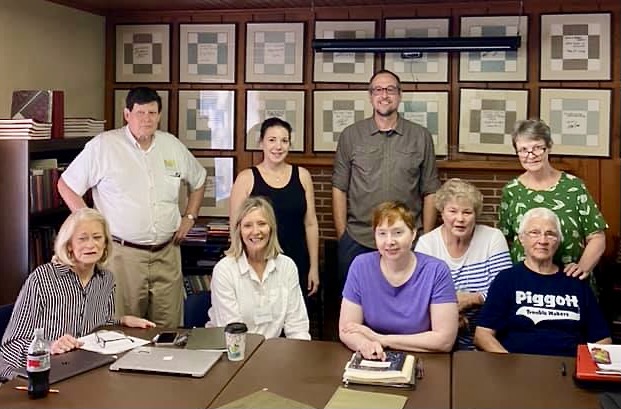
Seven attendees and I started our day with introductions and an overview of the retreat from the instructor and writer-in-residence, Mary Miller. Miller, an approachable storyteller whose prose chronicles the tension and tedium of everyday life, has published two novels and two collections of short stories, along with stories in The Paris Review, the Oxford American, and other well-regarded periodicals. I listened to her latest novel, Biloxi, on my drive south from Minneapolis.

I decided to attend the retreat based my mom’s recommendation, although with some trepidation. My mom is a devoted attendee who thought I would benefit from the collegial atmosphere and discussions about craft. I’ve never attended a writing retreat and didn’t relish the idea of having my writing critiqued by a bunch of geriatric strangers. I’m not even a big Hemingway fan, either. I enjoy his writing but not enough to make the 13-hour drive to visit the place he occasionally visited while writing A Farewell to Arms.

Despite my doubts, it was a good excuse to visit my parents in Jonesboro, a short one-hour drive from the museum, and to try something different after a grueling year of Covid quarantine. That and I was still unemployed after a year and a half of job rejections. Why not use my spare time learning to be a better writer?

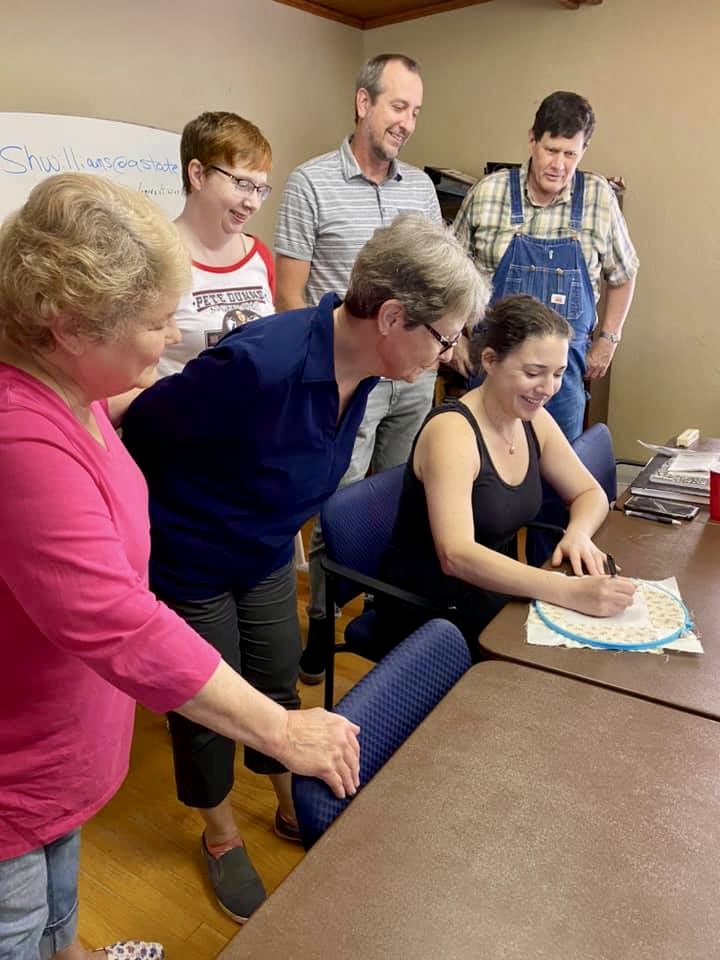
Arkansas State University Heritage Sites has been hosting the retreat at the Hemingway-Pfeiffer Museum annually since 2002. Every year, the visiting author signs a quilt square that is framed and placed on a wall in the Educational Center. The earliest square is from July 7, 2002. It’s signed by author Lorian Hemingway, the daughter of Gregory Hemingway, Ernest’s youngest son with Pauline. Both she and her father – who later identified as Gloria and underwent gender reassignment surgery – each have fascinating stories all their own.

Those alluring details can’t stop me from seeking refuge in a restroom, however.

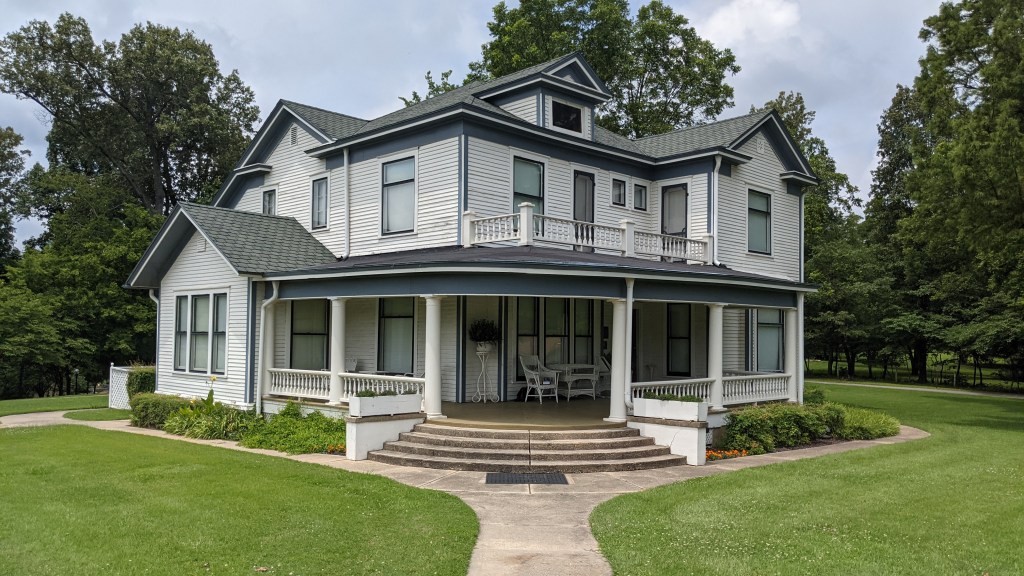
A short while earlier, following an awkward lunch, we are given an hour and a half of independent writing time. The director, Shannon Williams, tells us that we’re free to write wherever we like – here at the Educational Center, in the Pfeiffer house, or at the studio above the barn where Hemingway did his writing. I follow Dr. Adam Long, the executive director of Arkansas State University’s Heritage Sites, and the only other guy in our group, a sixty-something man named Bill from Kentucky.

Adam leads us to the house and gives us a cursory tour of the rooms, pointing out places where we’re welcome to write. I choose an open room on the second floor with conference chairs arranged around the perimeter. Adam tells me they probably won’t have any tours today, but if people do come through, I can just close the door and continue working. That will be interesting, I think, imagining myself springing to my feet and slamming the door on a family who planned months on end to visit this historic home once graced by Hemingway.

Adam adds that he will lock the front door to the house because it tends to blow open. He and Bill head off to see the rest of the house.

I start working on a story about childhood friends, but I’m too unsettled to focus. I had just watched Ken Burns’ PBS documentary on Hemingway before my visit, and now I want to explore the house and see the remnants of the writer’s experience in Arkansas. As I wander room to room looking at the memorabilia, the downstairs door opens and closes, and I hear shuffling and banging. Bill must have returned, and it sounds like he’s burglarizing the place. I want to investigate, but I’m too tired to bother.

Fathers and Sons

My trip to Piggott had taken a surprise turn when my traveling companion – my 11-year-old son, Oliver – and I arrived at the midway point of our drive. I had reserved a teepee on Airbnb for our stop in Kansas City, Hemingway’s old stomping grounds, on the way to my parents’ place in Jonesboro. Oliver was going to hang out with his grandparents and cousins while I attended the retreat.

At the first sight of the teepee, Oliver was thoroughly nonplussed. “Do we have to stay there tonight?” he whined.

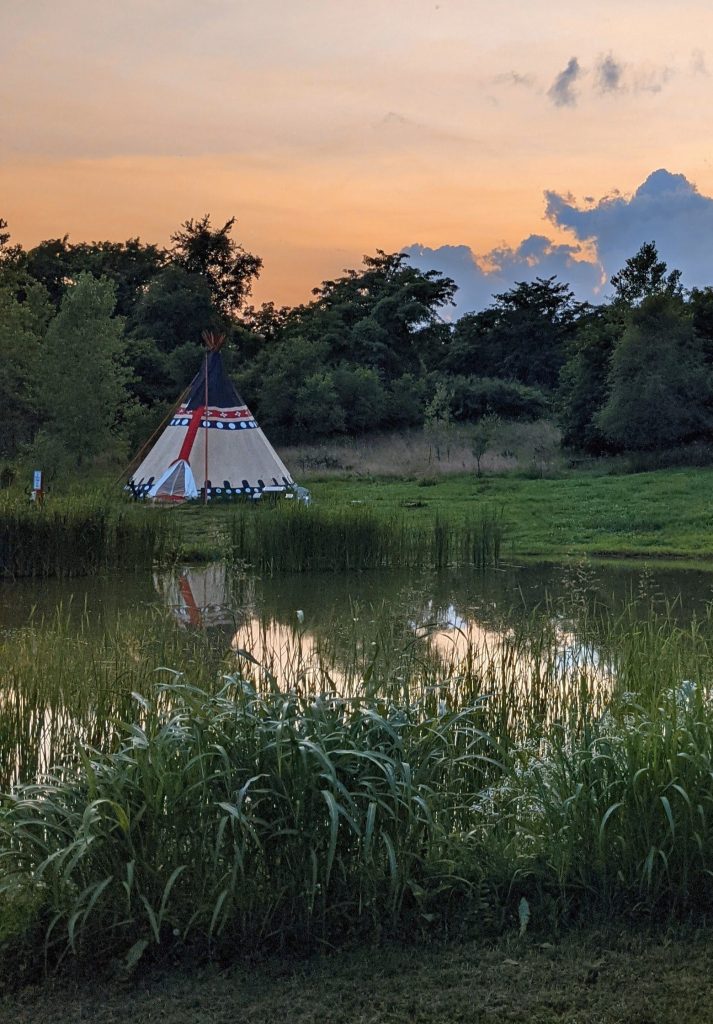
Our Airbnb teepee outside Kansas City, Missouri.

He wanted AC and TV, not BS. He wanted to be back home playing Fortnite or Minecraft on his PC, not hanging out in a teepee with faux-Native American décor listening to his old man snore.

“It’ll be an adventure!” I enthused.

“Yeah, right,” came his inevitable reply.

Situated off a deteriorating highway flanked by abandoned storefronts, our teepee was tucked in the backyard of a modest suburban home and right next to a murky pond that belched with croaking bull frogs. I went to “test” the outhouse and told Oliver we would have the distinct privilege of pooping in a sawdust-filled five-gallon bucket. He dropped his head in defeat and sulked into the teepee.

It was muggy outside, and Oliver complained that he felt sticky and gross, so he stripped off his shirt and settled in to watch YouTube videos on the laptop. That’s when the bull frogs kicked up their croaks a notch and started doing call-and-response with a chorus of crickets.

“How am I supposed to sleep with all this noise?!” Oliver demanded, storming over to a chair and announcing that he would be listening to Yo-Yo Ma until he fell asleep.

“Good call,” I replied, returning to my place in Hemingway’s A Moveable Feast. A short chapter later, I glanced over my shoulder to see Oliver soundly sleeping while the frogs and crickets competed for swamp cred.

A visitor paid us a visit as soon as Oliver fell asleep. I should have known our luck would take a turn that evening.

The teepee was illuminated inside by solar-powered patio lights. They were brighter than a single table lamp but dim enough to be ignored by heavy sleepers. Oliver always slept with a table lamp on; I customarily slept in darkness that rivaled black holes. By 2 a.m., Oliver’s phone was long dead, and I was wide awake. Oliver started to toss and turn while I thought through the logistics of Plan B. I would simply book a hotel the next day, and we could spend the afternoon in Kansas City with friends before driving to Jonesboro on Sunday.

Plan B changed to Plan C the moment Oliver woke up.

“I can’t sleep with all this noise!” he whined, springing out of bed and frantically pacing the back and forth in the teepee.

“Do you want to pack up and drive to Jonesboro?” I asked him, hoping he would say no.

“Oh, Dada. I know!” he beamed. “We can get some gum and energy drinks and listen to loud music to stay awake! You can get a coffee and an energy drink, so you’ll have a back-up after you finish the first.”

We were back on the highway in less than 15 minutes. At 2:30 in the morning. By the time we made it to Jonesboro, the car, my son, and I were all cruising on fumes. Oliver slept soundly for hours after our arrival, while I struggled to catch a couple hours of rest.

My eyes finally dimmed as I reread lines from Hemingway’s story, “Fathers and Sons”:

Like all men with a faculty that surpasses human requirements, his father was very nervous. Then, too, he was sentimental, and, like most sentimental people, he was both cruel and abused. Also, he had much bad luck, and it was not all of it his own.

I, too, had been cursed with much bad luck, bad luck that had left me feeling suicidal at times. Fortunately, I had a loving son to accompany me on my journey.

A Clean, Well-Lighted Place

Monday morning rolled around, and I packed the car for the short drive northeast from Jonesboro to Piggott. I’m nearly 50, but my mom nevertheless insisted on loading me up with a pantry’s worth of snacks before taking my picture in front of the car. I felt like an overgrown kid heading to summer camp.

The drive through rural Arkansas, through towns named Marmaduke and Rector, made me lonely – the flat farmland and small, sometimes desolate, towns reminding me of how empty and quiet our country can be beyond the cacophony and occasional chaos of cities like Minneapolis.

When I finally pulled into the drive of the Pfeiffer home, I took a moment to sit in my car and examine the large but plain Victorian facade. It wasn’t as stately as I had anticipated. It didn’t look grandiose enough to house Hemingway’s larger-than-life persona or the fortunes of his in-laws’ pharmaceutical empire. But it definitely dwarfed the ‘70s-style brick rambler that served as the Hemingway-Pfeiffer Educational Center, where our writing classes would be held.

The Hemingway-Pfeiffer Museum and Educational Center in Piggott, Arkansas. Hemingway occasionally visited the home of his second wife, Pauline Pfeiffer, during their marriage from 1927-1940.

As I entered the center and angled my way toward a seat, an older woman at the conference table blurted out, “I bet I know who you are. You’re Fay’s son.” She introduced herself as Charlotte, a friend of my mom. They had attended several retreats together. Another woman in the room chimed in, “Oh, yeah. Fay with no ‘e.’ She’s a regular.” That was Talya, the only published novelist in the group besides the instructor.

Oh, great, I thought. Every expletive and lurid phrase I read aloud is going to find its way back to my mom. Did I even have anything free of profanity or sexual innuendo, I wondered.

Lucky for me, I wouldn’t be called on to share my work the first day. Instead, we had a great conversation about the humor and wisdom of Anne Lamott’s Bird by Bird, a book all novice writers are encouraged to read at one point or another, and then dove into a reading of Joe Brainard’s I Remember. Miller, reading the crowd, skimmed over Brainard’s more titillating memories about his sexual experiences.

It was after that and lunch that we broke for independent writing time, and I found myself alone in the Pfeiffer house before hiding in the restroom. When I returned to the Educational Center, Karen, an assistant with ASU Heritage Sites, announced to the group in an almost conspiratorial tone that I had selected Max’s room in the house. Max was the Pfeiffer’s fourth child who died from the 1918 flu epidemic at age 11. I had chosen the dead kid’s room, who died from the flu no less! Was that an omen?

A not-so-motley crew: (Front row, from left) Tonia, Talya, Beth, Charlotte, and Linda. (Back row, from left) Bill, Mary, me, and Karen.

Once the entire group returns to the meeting room, two attendees volunteer to share what they wrote during the break. Tonia, a retired attorney from Little Rock, reads an endearing account detailing her discovery that her maternal grandfather, who adored her and showered her with love and attention, wasn’t her real grandfather. Next up, Bill, whose occupation escaped me, launches into a sprawling, borderline-metaphysical account of his life and the universe. We’re dumbfounded. It’s a prolix soliloquy that sounds like free verse. (The next day, Bill transforms the first chapter of prose into a poem per the group’s recommendation, and we all agree that it’s much better.)

With that, we’re dismissed for the day, and I jump in my car and make a beeline for the Missouri border. Piggott is in a dry county, and I need booze to help me sleep and process my first strange day at the retreat.

Back in my room, I pour myself some scotch, fire up Spotify for background music, and set to work on a story about the competitive nature of two boys, and the envy one has toward the other.

Too distracted to write, I step outside my room to scope out the inn’s lounge and dining room. The door clicks shut, and I immediately realize I’m locked out. Shit! My cell phone is in the room, and there’s no phone in the lobby. I ring the front bell, but no one responds, so I head back to the second floor and nervously knock on the guest’s door across from mine. No answer. I cross the hall and knock on another door.

“Is someone out there?” a woman yells. She peeks through the curtain in the door’s window, and I recognize Charlotte’s face. “Who is that?!”

“It’s Damon, Charlotte. I’m sorry to bother you, but I’ve locked myself out of my room, and I need to call someone to let me in.”

“I’m not dressed, Damon,” she adds before quickly cracking open the door and thrusting her phone at me.

“I’m very sorry. This should only take a minute,” I reassure her.

“It’s okay,” she tells me. “I’m your mother’s friend.”

Sleep comes easier that evening with the help of scotch. Like the old man who stays too late drinking at a café in Hemingway’s story, “A Clean, Well-Lighted Place,” I feel like the loneliest man in the world, the drink in hand my only companion. But I am content. I don’t even mind the rumble of trains outside the inn.

A Way You’ll Never Be

We open the conversation on the second day with a discussion about Jo Ann Beard’s essay “Now,” which I love for the vivid description of Alaska, the author’s channeling of her father’s World War II experience, and references to Neil Young and Denis Johnson. There is dissent over the essay’s value. Some of us like the imagery and the free-form style; others, especially Beth, a writing instructor at the University of Tennessee-Martin, is frustrated by the lack of structure and focus.

We learn that the piece was originally a speech Beard presented and later printed in AGNI magazine. Beth is not cool with this. “Do you think we could get away with something like that?”

Mary clarifies that Beard wrote a celebrated essay for The New Yorker called “The Fourth State of Matter” about a mass shooting at the University of Iowa that won her a loyal audience from that point forward. Mary promises to hunt it down for us.

Next up is Cheever’s story Reunion. This one is about an estranged father and son and a day-drinking excursion. It promptly brings out the psychoanalysts among us. Bill, for the first of what will be many times to follow, opens the Pandora’s Box of his personal life and shares an account of his time in a psychiatric hospital. As he veers farther off topic and into the murkier recesses of his mind, the rest of us, intrigued and unnerved, collectively pull back a little from the table, acknowledging that a boundary has been crossed.

Charlotte, a former school librarian, soon mollifies us with a piece about her childhood in Jonesboro, Arkansas, in the 1950s. Next, Beth shares a story about meeting William Stafford during her stint as a graduate student, reminiscing how she smugly treated the anthologized poet. Her story is full of subtle references to Stafford’s “Traveling Through the Dark.” The references are lost on our group. It’s been more than 20 years since I’ve read the poem, and the others haven’t read it at all. But it’s a clever story, and a beautiful reminder to wake up every morning and get to work on what you love.

That evening after dinner, I grab some scotch, my portable speaker, and a copy of Beard’s “The Fourth State of Matter” and head to the rear deck of the inn to read and scribble some thoughts. The sun is setting in time with Yo-Yo Ma’s cello. The deck shakes as a train blows by in the background. A flock of small birds float by on the breeze, skirting past a waxing gibbous moon that has just begun to peak around the corner of the inn’s roof. A text from my wife says she’ll call soon. The phone remains silent.

I look across the town from the balcony. It must have been a much different place in Hemingway’s day. I gulp down the scotch, savoring the earthy-sweet bloom of heat in my mouth. I know that I will never be the writer I want to be.

Back in my room, I pull up Elia Kazan’s A Face in the Crowd on my laptop. The movie is Piggott’s other major claim to fame. Part of the film is set in the town.

The movie had a resurgence after the 2016 election. Several political commentators noted the similarities between Donald Trump and the film’s main character, Larry “Lonesome” Rhodes. Lonesome is a drifter who uses his good-ole-boy schtick to rise to celebrity status on TV before wedging his way into politics. He’s even referred to as an “influencer,” just like today’s media-savvy promoters on YouTube, Instagram, and TikTok. And, like Trump, he embellishes a populist persona to pitch false claims to “real Americans” over the airwaves.

Piggott is smack dab in Trump country. I could step outside the inn and count no less than five or six Trump bumper stickers. I could walk a few blocks from the main square and spot at least two or three “Trump 2020” banners and even a crudely written “Stop the Steal” yard sign.

The irony isn’t lost on me, but, judging by the political placards lingering long past the election, the locals didn’t get the memo.

A Day’s Wait

On Wednesday morning, Mary is excited to ask us about Beard’s essay, “The Fourth State of Matter.” We dig into Beard’s description of the degeneration of her dog, her husband’s abandonment of their marriage, and the mass shooting that kills her colleagues in the Department of Physics and Astronomy at the University of Iowa.

It’s a riveting essay with an eloquence that forces us to question our value and abilities as writers. If it takes a topic as horrific as mass murder to be a noteworthy writer, what hope do we have? How do you compete with that in a world full of limited attention spans?

“I guess I can’t be a writer, then,” Charlotte says. “Nothing that interesting happens to me. My life is too normal.”

We take turns offering her hollow words of encouragement, but each of us seems to realize the reality of the situation. A devastatingly sad essay has left us sadder still.   

Mary signing her quilt square for the “wall of fame.”

Fortunately, Karen turns our thoughts and stomachs away from despair. A veteran violist with the Memphis Symphony Orchestra, Karen shares a short piece about a subject that is near and dear to our hearts: pork. She strings together a comparative history of pork dishes in the Mid-South with their native dishes in Austria, Germany, and France, singing its praises with allusions to great composers. It’s the perfect transition to lunch.

At break, I head back to the inn to prep for a phone interview for a job in Minneapolis. Rejection fresh on my mind, I take a hard pass on my independent writing time and stretch out on the bed. It’s my turn to read my work when the cohort regroups this afternoon, and I’m not relishing the forthcoming criticism.

Back in the classroom, I read the first part of my story, broadcasting the right tone for the story’s insecure adolescent narrator. Even though I emphasize words like “piss” and “dick,” the overall response is positive. A couple of the attendees say they can relate to the narrator’s plight. Some want to know what happens in the second part, since I accidentally included a page and a half of it. I want to rework the second part, I explain, describing some of the potential plot scenarios I’m considering. The group is encouraging, and I spend the rest of the afternoon session playing through various outcomes in my head.

Talya reads a flash fiction story next. It’s about an aging woman inspecting her garden in the morning. I can easily imagine the piece in the front half of Harper’s magazine.

Before we break for the day, I invite the group to join me for dinner at the pizza place on the square and note that the deck behind the inn has a great view of the sunset. I could use some company. Tonia and Talya are the only takers.

At the pizza place, we ask the teenage waitress holding down the fort if it’s okay to bring our own wine into the restaurant.

“I don’t know, but I doubt anyone will be here tonight, so I really don’t care,” she replies.

Without missing a beat, Tonia hands me the key to her room and gives me instructions on where to find her box of Franzia. I smuggle my bottle of red and Tonia’s box of white back to the pizza joint in my book bag, and we wash down our pizza with glassfuls of contraband.   

One Reader Writes

We dive into some flash fiction samples on Thursday, starting with George Saunders’ story “Sticks.” One of my favorite living writers, Saunders captures my attention by creating absurd and surrealistic settings that are navigated by characters struggling with their humanity. “Sticks” is about Saunders’ father’s tradition of decorating a pole for the holidays.

The story inspires me to search for quotes from Saunders while the group reviews our other samples for the day. Saunders has a reputation for producing quotes like this: “What I regret most in my life are failures of kindness. Those moments when another human being was there, in front of me, suffering and I responded … sensibly. Reservedly. Mildly.”

I will discover that this is the universe, via Saunders, preparing me for the afternoon session.

One o’clock rolls around, and I meet with Mary for my one-on-one review session. I had decided to share the first 10 pages of a memoir I began writing during the pandemic because it felt like the most earnest writing I’ve done to date. The book opens with a recollection of a night in December 2020 when I contemplated hanging myself from a tree in the backyard of my rental house in south Minneapolis. My wife and kids were inside decorating the Christmas tree and listening to holiday music while I sat outside by a fire and methodically attached thick zip ties around my neck.

As the book progresses, I shift settings to a visit with an old college friend that prompts flashbacks to the the year I spent in Bulgaria after graduation. Mary points out that the sections about Bulgaria come across more naturally than the rest. She encourages me to keep working on the material and share the draft with her once I have 200 pages.

I leave the review session feeling optimistic about my writing for the first time in as long as I can remember. I’ve always considered myself more of a reader than a writer, so the validation gives me a boost.

The confidence doesn’t last long. Back in the class, I read a couple of my poems, foolishly following Beth, the real poet in the room. I first read a poem called “Old Man Winter.” At the end of the first page, I freeze. I haven’t printed the second page. The room is silent. Embarrassed, I quickly print copies of the second page, pass them around the table, and resume my reading. When I finish, I get an obligatory “That’s nice” from someone before the others start lobbing questions and comments my way.

“What do you mean by ‘latent snow’?” one woman asks.

“Maybe you should change this to a flash fiction piece,” another recommends.

“Do you really need the adjective ‘dusty’ to describe the smell of radiator heat or ‘musty’ for the warmth of an afghan?” the instructor critiques.

I can only manage a meek defense.

The next poem I read is about my daughter – her search for knowledge and answers and my fear of losing her too soon to a cruel world that doesn’t love her. I choke up as I read the lines: “I want to wrap my arms around you,/ Shield you from your pain/ And keep you close to my heart./ But you’re leaving me at 13,/ Too soon, it seems,/ To fully protect you or to fully grieve.”

The tears are unstoppable. My strained relationship with my daughter has been lingering in the back of my mind for months now, and I’m finally processing it. I apologize and explain it’s the first time I’ve read the poem aloud. The others smile as I finish the piece. My pathetic display is met with positive reception, and for the first time all week, I’m actually glad to be here.

That evening, after a catfish dinner with the group at a local restaurant, I let myself decompress. In a sense, I’ve accomplished something I wasn’t expecting – I’ve held out my writing as a mirror, reflecting deeply seated thoughts and beliefs for others to see, while discovering another vision of who I’ve become and who I want to be.

The End of Something

Boobs. That’s the topic that provides some much-needed levity during Friday’s discussion. It’s inspired by the reading of Lucille Clifton’s poem, “homage to my hips.” The attendees wonder if any poets have written about boobs in the same way, prompting Charlotte to search the web for poems about breasts. She comes across a book about Asian breasts. I tell her to proceed with caution. Scrolling down a webpage, she gasps, “Oh, my!” and we all start laughing.

The conversation takes a more serious tone when we discuss the story “Envy” by Kathryn Chetkovich. It’s about her relationship with Jonathan Franzen, and her jealousy over his success. She doesn’t mention him by name in the story, but everyone looks it up.

It’s an appropriate, maybe coincidental, choice for one of our final readings during the retreat. Envy could be considered a central theme of Hemingway’s work. His characters envy bullfighters, wild game hunters, other men’s women. To an extent, Hemingway envied the writers in Paris who helped him get his start in fiction: Sherwood Anderson, Gertrude Stein, Ezra Pound, and F. Scott Fitzgerald. Some of those writers ultimately envied him in return – or, at least, Fitzgerald did if Hemingway’s own egotistical account in A Movable Feast is any indication.

I’m certainly envious of the other writers in the group who appear confident and at ease with their writing, something I had hoped to achieve by attending the retreat.

As the final day progresses, Talya shares a story about the deterioration of her long-vacant high school and the disappearance of time. We take turns sharing memories of our old schools, enchanted by nostalgia.

Karen captures our attention with a travelogue about visiting Key West during the Cuban Missile Crisis in 1962. We all want to hear more about the mermaids of Weeki Wachee and Karen’s mother’s nucleomituphobia (a term that’s new to all of us). I don’t think to ask Karen if she knew who Hemingway was when she was a little girl traveling through his former hometown a year and a half after he blew his brains out in Idaho. And what would the author have made of the Bay of Pigs and the missile crisis, I wonder. Hemingway didn’t have much interest in Castro and Guevara or their fight against Batista. He just wanted to fish and drink and salvage his reputation as a writer with The Old Man and the Sea.

The reading that most intrigues me is a final poem from Beth called Trail. She asks us to consider two possible endings. I opt for version one but think she should stop short with the lines: “Listen to the bell ring./ It does not have to be/ the devil declaring/ he’s come to call again.”

I recognize it as a nod to Hawthorne’s “Young Goodman Brown,” but I don’t probe Beth about the allusion, and I gloss over the possible connection to For Whom the Bells Tolls. It’s only after the retreat that I review the ending of Hemingway’s highly regarded novel. The book ends with the main character, Robert Jordan, lying in a forest with a broken leg as he prepares to blow up a bridge to thwart the enemy’s advance. Jordan faces a dilemma: He can carry out the mission and wait for the enemy to find him and kill him while his fellow soldiers escape, or he can try to flee with his comrades and possibly live out his days with his lover, Maria. He chooses to stay, the smell of the pine needles on the forest floor filling him with nostalgia.

The novel reminds us of nature’s maxim – all things must come to an end; we are simply part of the cycle. Life can seem futile, but does it remain so if we get to choose how to live it?

I came to the retreat with a sense of dread. I would be bored. I wouldn’t have anything in common with the attendees. I would realize my efforts to write were hopeless. It would drive me deeper into the depression and futility that have haunted me for years.

Instead, I leave the retreat with a sense of purpose. Impressed with the insight of my fellow writers and the confidence they have to examine memories both beautiful and hideous. I want that. I don’t want to succumb to despair and cut my life short like Hemingway.

The devil might very well come calling again, but hopefully I’ll be too busy writing to pay him any attention.

Featured

Lofty Ideas

The first time I saw the actor Kevin Bacon riding a bike around a loft in the movie Quicksilver I knew that I wanted to live or work in a space like that one day. Bacon is a bicycle messenger in the movie, and the thrill of dodging delivery trucks, encroaching taxis and car doors during the day and then retreating to a wide-open, warehouse-sized space to ride laps inside was almost too good for my 13-year-old freestyle-riding self to imagine. 

My loft fantasy reached a fever pitch during my dorm-room days in college during the ‘90s. I was 6’4” and gangly, and whenever I scurried about my shared room of less than 200 square feet, I felt like a Great Dane hunting for the last bit of kibble in a tiny kennel.

I’ve lived in small apartments and homes ever since then. All of my places have had tiny bathrooms, too, requiring some level of contortion to safely position myself on the toilet. Imagine Houdini trapped in a tiny bathroom. I frequently fantasized about owning a big loft where I could take care of business without nearly dislocating my soldier trying to reach the place “where the sun don’t shine.”

The desire for my own private space also coincided with my desire to be a writer and my burgeoning love of Existential literature. At the time, I pictured myself as the narrator in Dostoevsky’s Notes from the Underground, or the literary equivalent in Ellison’s Invisible Man – hunkered down in a crudely lit basement, writing screeds about the shortfalls of society, then setting out on long, lonely walks like Kierkegaard in Copenhagen. An airy, well-lighted space was antithetical to the artificial image I had constructed for myself.

If it wasn’t for Covid and months on end of being cooped up at home with cranky kids and a dog that barked at every living thing that moved in the big, bad world beyond the picture window, I might be typing this from a windowless, subterranean, claustrophobic studio instead of a second-story, 30-by-30-foot loft with a 16-foot-high exposed ceiling and a bank of six-foot-tall windows that flood the room with depression-fighting natural light. But here I am, sitting at my cheap IKEA desk in the corner of the room, gazing across an uneven, well-worn wood floor oily in appearance and anchored by two massive posts, like a captain looking out at his ship’s deck. In the opposite corner is a partial kitchen cordoned off by French doors – my galley. There’s also a small enclosed office space with French doors that shares a wall with a recently tiled bathroom, which fills with the soft glow of filtered light from a frosted skylight. The walls to the south and east are beige brick sloppily tuckpointed with light-tan grout. Behind me, to the north, is fresh white drywall that separates the loft from the hallway dividing the building in two.

I am more than grateful to have a space like this, and I will enjoy every minute of it for the two or three months that my finances permit. Like everything else in life, the loft was the result of the right connection. A friend from my weekly evening night bike ride, a commercial real estate developer, offered me the unoccupied loft space in a building he owns in Northeast Minneapolis at a “friends and family” rate. Located above a vegan food supplier and a supper club closed due to Covid, the space previously housed an office. Now it houses an unemployed writer. 

Every time I punch the code into the outside door and walk up to the loft, creaking my way up the wooden stairs covered in a faded, trampled faux-Persian runner, a smile surfaces from deep within, pumped out by the sudden spike in my heartbeat, and I shake my head in surprise that I finally have someplace, for however briefly, to sit quietly and write without distraction. I barely even notice the shrieking and ripping of tape as staff at the vegan “butcher shop” below box up orders of meatless ribs and roasts, faux chicken and cheeses.

In a city struggling with a shortage of affordable housing, I know that I won’t be able to keep this space for long. During a recent weeknight bike ride, a small group of us stopped at the loft to gorge on some carry-out tacos and beer. As soon as we entered the space, one of the riders, a cardiologist, blurted out, “I want a studio!” A short while later, another rider showed up, this time a database analyst with a fortune 500 company. He immediately wanted to know if the space was available for residential lease. I could see the lust in his eyes.   

 Aloft, the Writer Dreams of Better Days Ahead

 In Bird by Bird, Anne Lamont writes:

Every room gives us layers of information about our past and present and who we are, our shrines and quirks and hopes and sorrows, our attempts to prove that we exist and are more or less Okay. You can see, in our rooms, how much light we need – how many light bulbs, candles, skylights we have – and in how we keep things lit, you can see how we try to comfort ourselves. The mix in our rooms is so touching: the clutter and the cracks in the wall belie a bleakness or brokenness in our lives, while photos and a few rare objects show our pride, our rare shining moments.

I have few objects in my studio to show my pride (pictures of my family, favorite records, my guitar), but I’m discovering new, intangible shining moments each day. Like the importance of sitting in the stillness and concentrating on my thoughts. Or the joy of meditating on an idea without interruption and then typing out that idea to contemplate later. Taking a break to stroll across the room and gently strum a few chords on the guitar before resuming work. Or sitting in the middle of the room with a glass of whiskey while the shrill notes from Miles Davis’ horn on Kind of Blue fill the empty room with breathy blasts of emotion.  

It may seem like twisted logic to crave more alone time during a pandemic, when we find ourselves cooped up at home and apart from our friends and extended family. Stay-at-Home orders have literally and figuratively masked the significance of personal space, making regular reprieves from the routine more valuable even as the options to occasionally get away for a short while become more difficult. I can hear the naysayers asking, “Why would you want to be alone more than you are already forced to be?” My answer to that is simple: As a writer, I’ve always needed it. As an unemployed parent of two kids always at home due to Covid and distance learning, I need it more than ever!

Searching the internet for research to challenge what might otherwise be perceived as a narcissistic indulgence, I came across an article posted on the Cleveland Clinic’s website. “As much as we love spending time with our family, we all need a little space, pandemic or not,” the article advised. “Rising COVID-19 numbers and the idea of being cooped up for the next five or six months only add fear and anxiety. And on top of all that, many people have seasonal depression this time of year.”[i] Granted, having a separate, private space to one’s self is rare and privileged. In the end, though, it costs me less than therapy, which I very much would have needed without the space.

Additional justification came from an article written by Diana Raab in Psychology Today:

Joseph Campbell (1988) also spoke of the importance of having a sacred space—a place without human contact, a place where you can simply be with yourself and be with who you are and who you might want to be. He viewed this place as one of creative incubation, saying that even though creativity might not happen right away when you’re in this special space, just having it tends to ignite the muse in each of us. In his book The Power of Myth, he said that such a room is essential for everybody. In that room, “you don’t know what was in the newspapers that morning, you don’t know who your friends are, you don’t know what you owe anybody, and you don’t know what anybody owes to you” (p. 115).[ii]

In this space, it’s just you and your imagination. Or, rather, it’s a sort of hero’s journey, as Campbell would have it, in which the writer sets out on an adventure, encounters trials, triumphs and returns home transformed with greater wisdom than before.

Writers such as George Bernard Shaw, E.B. White and Virginia Woolf would all agree. They are the more notorious cases who required their own private space to do their work. But there are many, many others. Jack Kerouac traveled all the way to a cabin in Big Sur to sober up and write, and his opening description of the walk from the cab to the cabin is one of the most visceral bits of narrative I remember. More recently, Karl Ove Knausgaard comments on the privacy he needed for writing in the second book of his six-book memoir, My Struggle: “I had written my debut novel at night, got up at eight in the evening and worked right through until the next morning. And the freedom that lay in it, and the space the night opened was perhaps what was necessary to find a way into something new.” 

As I type this sophomoric essay and think these lofty ideas inside a warm space on a dreary-white Minnesota afternoon, I realize how lucky I am. So, I’m going to enjoy every second I have. It takes me back to the days after college, to the office where I worked in Sofia, Bulgaria. I’d stay late at night after teaching an English class, listen to John Coltrane and write stories about what I’d seen and experienced. I still haven’t shared those with the world. I would like to. There’s so much humanity in those experiences: personal connections with abandoned Romany orphans, food and drink shared with devastated pensioners abandoned by the collapse of Soviet communism, has-been Bulgarian mobsters stalking naïve missionaries from Oklahoma – occasionally thwarted by the quick thinking of a jovial soccer player from Tampico, Mexico.

A space like this gives me room to start working on that, 25 years later. And, in the process, rediscover what it means to connect with what I once imagined was possible.   

[i] https://health.clevelandclinic.org/too-much-family-time-during-the-pandemic-heres-how-to-cope/

[ii] https://www.psychologytoday.com/us/blog/the-empowerment-diary/201711/room-our-own